Singapore's Changi Airport has been named the world's best airport for art, according to the Skytrax World Airport Awards, an honor often described as "the Oscars of the aviation industry."
The recognition adds to Changi's already unprecedented trophy case. The airport has claimed the top prize of World's Best Airport 14 times at the Skytrax awards, more than any other terminal in the world.
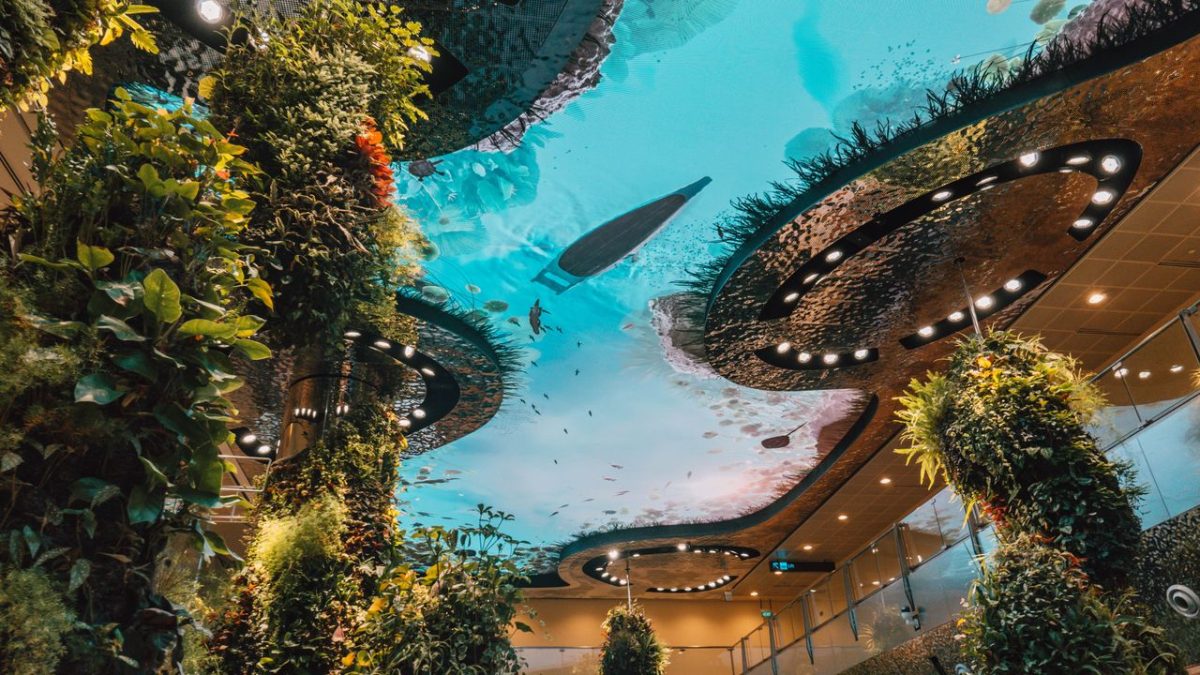
Changi's art collection spans multiple terminals and includes large-scale installations, kinetic sculptures, and immersive digital works. The airport's most famous piece, a 40-meter-tall indoor waterfall called the Rain Vortex at Jewel Changi, is surrounded by a terraced forest and draws millions of visitors annually — many of whom never leave the airport.
The airport's approach to art is not decorative but architectural. Terminal 4, which opened in 2017, features a 70-meter-long LED wall that displays rotating digital artworks, while Terminal 3 hosts a 16-meter-tall sliding sculpture titled "Kinetic Rain" composed of 1,216 bronze droplets that move in choreographed patterns.
Skytrax, a UK-based aviation research firm, evaluates airports based on passenger surveys covering more than 550 airports worldwide. The awards are widely cited by airlines, tourism boards, and airport operators as a benchmark for customer satisfaction.
Changi's art program is part of a broader strategy to position the airport as a destination rather than a transit point. The 2019 opening of Jewel Changi, a 1.4-million-square-foot retail and entertainment complex connected to the terminals, cost approximately $1.25 billion and was designed by architect Moshe Safdie.
Other airports that have invested heavily in art include Amsterdam's Schiphol, which houses a branch of the Rijksmuseum, and Incheon International Airport in South Korea, which operates a cultural center featuring traditional Korean performances and craft exhibitions.
For Changi, the art is also a competitive advantage. The airport handled 68.4 million passengers in 2024, up from 58.9 million in 2023, as global air travel continued its post-pandemic recovery, according to Changi Airport Group.
The airport's art collection is curated by a dedicated team that commissions works from both Singaporean and international artists. Pieces are rotated regularly, and some installations are interactive, responding to passenger movement through sensors and motion-tracking technology.
Changi's latest award comes as airports worldwide face pressure to differentiate themselves beyond retail and dining. Art has emerged as a low-cost, high-impact way to improve passenger experience and create memorable spaces, airport designers say.