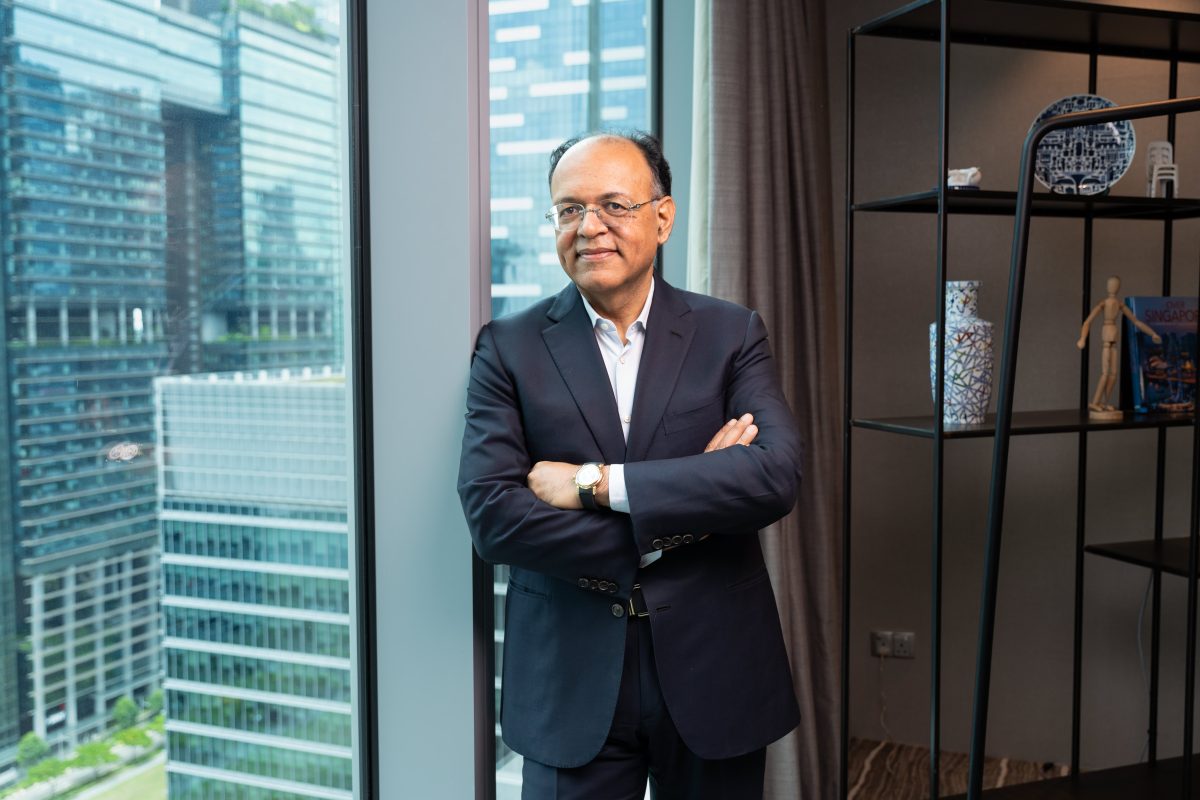
Gautam Kumra, Asia chairman at consulting firm McKinsey & Co., said the most effective owner-CEOs in Asia distinguish themselves through a single cognitive skill: the ability to hold contradictory ideas at the same time, CNBC reported.
In an interview with the network, Kumra described that trait as thinking long-term while managing short-term pressures, and seeing the big picture without losing sight of operational detail. He pointed to it as the dividing line between truly great leaders and the rest of the field.
The observation carries weight because of the scale McKinsey operates at in the region. The firm advises many of Asia's largest family-controlled conglomerates, a business model in which founders or their heirs often hold both ownership and executive authority, unlike the split structure common at U.S. public companies.
That ownership structure changes the calculus for decision-making. An owner-CEO who cannot be removed by a board can absorb short-term losses to fund a decade-long bet, but the same freedom can also entrench a failing strategy. Kumra's point is that the strongest operators do both jobs at once rather than choosing one.
Asia's family businesses account for a substantial share of the region's largest listed companies, from South Korea's chaebol to India's conglomerates and Southeast Asia's diversified holding groups. Succession is a live issue across many of them as first- and second-generation founders hand control to heirs with different training and priorities.
"What distinguishes truly great and effective leaders from everyone else?" Kumra said, framing the question that drove his answer. His response centered on the discipline of balancing opposing demands rather than resolving them in favor of one side.
The interview did not include specific company examples or performance data tying the trait to financial results. McKinsey has not published a study quantifying the link between contradictory-thinking ability and returns at Asian owner-led firms.
Kumra's role puts him at the center of McKinsey's client work across the region, where the firm competes with Boston Consulting Group and Bain & Company for advisory contracts with the same family-controlled enterprises. His comments reflect the firm's pitch to those clients as much as a neutral finding.
The practical takeaway for leaders at owner-controlled companies is narrower than a general leadership lesson: the skill Kumra describes is most valuable precisely where a single person holds both the mandate to act fast and the authority to plan far out.