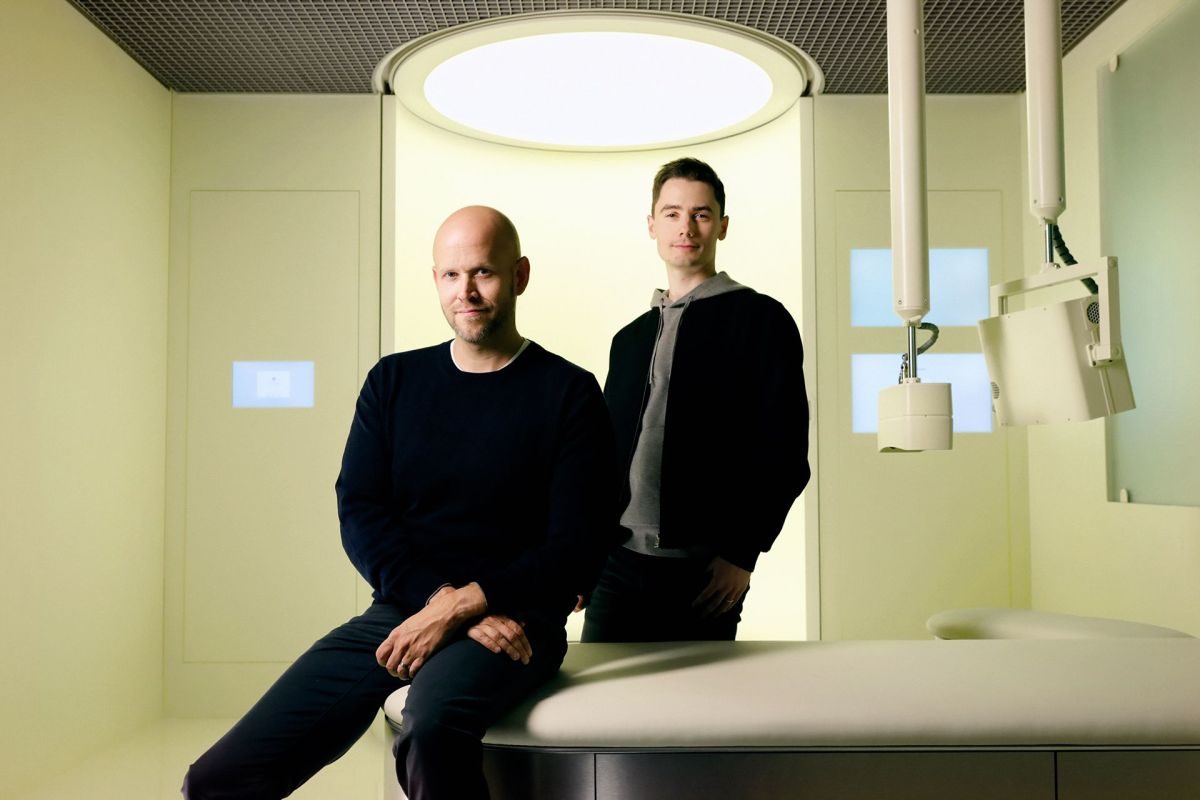
Neko Health, the preventive health startup co-founded by Spotify billionaire Daniel Ek, has entered the United States market backed by $700 million in funding, betting that Americans will pay out of pocket for body scans designed to catch disease before symptoms appear.
The Stockholm-based company operates scanning centers equipped with dozens of sensors that measure everything from heart rhythm and blood pressure to skin lesions and arterial stiffness in a session lasting under an hour. Neko positions the service as a complement to traditional annual physicals, which typically rely on basic blood panels and manual examinations that can miss early-stage conditions.
The $700 million raise ranks among the largest funding rounds for any preventive health company in Europe, according to company disclosures. That capital now funds Neko's US expansion, where it enters a market already crowded with competitors including Prenuvo, Ezra, and SimonMed, all offering full-body MRI scans that range from $1,000 to $2,500 per session.
Neko differentiates itself by combining multiple diagnostic technologies into a single visit rather than relying solely on MRI imaging. The company says its sensor array captures cardiovascular, metabolic, and dermatological data simultaneously, then routes results through proprietary software that flags anomalies for physician review.
Ek co-founded Neko in 2018 with Hjalmar Nilsonne, who serves as CEO. The Spotify executive chairman has described the venture as an effort to shift healthcare from reactive treatment toward early detection, a model that has gained traction among wealthy consumers willing to pay for services outside insurance networks.
The American launch raises questions about accessibility and clinical validation. Neko's scans are not covered by most insurance plans, and the company has not yet published peer-reviewed outcome data showing that its specific screening protocol reduces mortality or improves long-term health outcomes compared to standard care.
Preventive scanning companies have faced scrutiny from radiologists and primary care physicians who warn that incidental findings can trigger unnecessary biopsies, anxiety, and follow-up procedures. The American College of Radiology has issued guidance cautioning against whole-body screening in asymptomatic patients without established clinical indications.
Neko has not disclosed pricing for its US locations or how many scanning centers it plans to open. The company currently operates clinics in Stockholm and London, where appointments reportedly book out weeks in advance.
The broader preventive health market has attracted significant venture capital as longevity-focused startups pitch consumers on extending healthspan through early intervention. Neko's $700 million war chest gives it substantial runway to build infrastructure and brand recognition in a market where consumer awareness of full-body scanning remains limited to affluent, health-conscious demographics.
Whether Neko's technology can demonstrate measurable clinical benefit beyond what standard preventive care already provides will determine if the model scales beyond its current base of early adopters, or remains a premium service for those who can afford to pay for peace of mind.