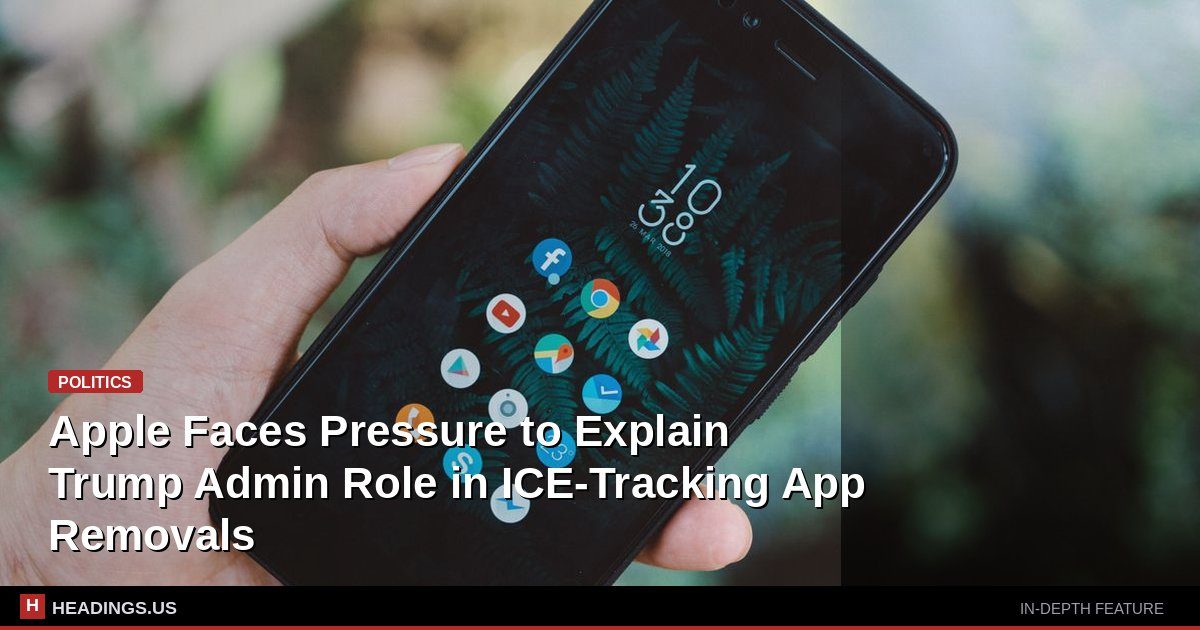
Apple is facing mounting pressure to disclose whether the Trump administration played a role in the company's decision to remove apps that allowed users to track Immigration and Customs Enforcement activity, according to a report from Ars Technica.
The tech giant pulled the apps from its App Store in recent days, drawing sharp criticism from civil liberties advocates and immigration rights groups who say the removals limit public oversight of federal immigration enforcement operations.
Critics are now demanding that Apple explain exactly what prompted the removals and whether government officials contacted the company about the apps. The question at the center of the dispute: did Apple act on its own, or did the White House or ICE pressure the company to take them down?
Apple has not publicly detailed its reasoning for removing the apps. The company typically cites App Store policy violations when it removes software, but it has not offered specifics in this case.
ICE has expanded its immigration enforcement operations significantly under the Trump administration, conducting high-profile raids and arrests in major cities. Community groups and immigrant rights organizations have turned to technology to document and track that activity, using crowdsourced apps to alert residents when agents are operating in their neighborhoods.
The removals mark a notable shift for Apple, which has previously resisted government demands to alter its App Store offerings. In 2020, the company refused to remove the app Signal despite pressure from authorities, and it has clashed with law enforcement over encryption and user privacy in high-profile cases.
Apple CEO Tim Cook has maintained a public relationship with President Trump, meeting with him at the White House and attending his inauguration. That relationship has drawn scrutiny from shareholders and privacy advocates who question whether Apple's business interests are influencing decisions that affect users' access to information.
Sen. Ron Wyden, an Oregon Democrat who has tracked tech policy issues, has previously warned that government pressure on app stores could set a dangerous precedent for free expression. His office did not immediately respond to a request for comment.
The removals raise broader questions about how much control technology companies should have over tools that let citizens monitor government activity. If Apple can be pressured into removing tracking apps, critics argue, other platforms could face similar demands.
Apple has not said whether it will restore the apps or offer a fuller explanation. The company did not respond to Ars Technica's request for comment before publication.
Immigration advocates say the apps served as a critical safety tool for communities facing increased enforcement. Without them, they argue, residents have fewer ways to avoid encounters with federal agents.
The episode is the latest flashpoint in a growing debate over the role of tech companies as gatekeepers of public information, particularly when government pressure intersects with corporate decision-making.