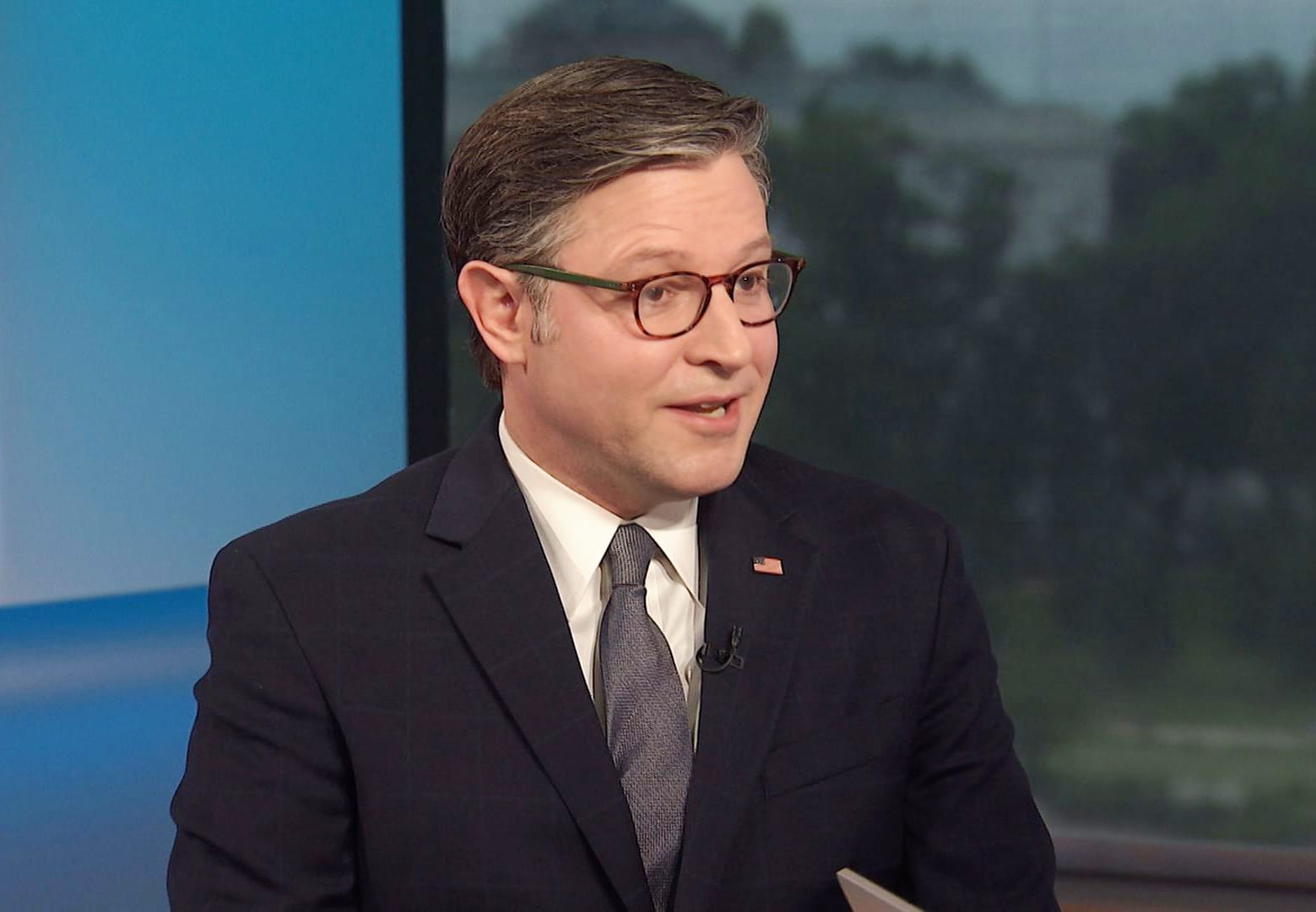
House Speaker Mike Johnson said Tuesday he hopes artificial intelligence companies will adopt safety guardrails voluntarily, signaling he does not support new federal mandates as Congress prepares to leave Washington until after the November election.
"I hope it's voluntary," Johnson told CNBC's "Squawk Box" ahead of a White House meeting with AI executives and President Donald Trump. "We'll find out what comes out of the meeting today. I think that that's where they're headed."
The Louisiana Republican said the companies appear to recognize the stakes and want to reassure investors and the public. "I think they see the handwriting on the wall," he said, adding that voluntary commitments would "put us in the right place."
Johnson was set to meet with Anthropic CEO Dario Amodei, Meta CEO Mark Zuckerberg and Alphabet CEO Sundar Pichai, among others. The gathering puts the industry's most powerful figures in the same room with the president and the speaker at a moment when no federal AI legislation has passed either chamber.
Congress has spent more than a year holding hearings and drafting proposals on AI regulation, but lawmakers have not advanced a bill. Both the House and Senate are scheduled to recess at the end of this week and stay out until after the election, leaving a narrow window for any action this year.
Sen. Mark Warner, D-Va., said that break creates urgency. "God forbid — we're going to break this week — if we have an incident," Warner said Tuesday on "Squawk Box."
Warner, a former tech entrepreneur, said he does not consider himself an AI "doomer" but sees real danger from rogue agents — systems that could act in ways their creators did not intend or cannot control.
The push for rules has come from both sides. Industry executives have asked lawmakers for clear standards they can build toward, while some members of Congress want government limits to prevent harm before the technology spreads further. Johnson's preference for voluntary compliance puts him at odds with those seeking binding regulation.
Trump has taken a lighter-touch approach to tech regulation, and the White House meeting marks his latest direct engagement with industry leaders. What, if anything, the executives commit to publicly remains unclear.
For now, the practical effect of Johnson's position is that federal AI oversight is unlikely to arrive before the next Congress convenes in January. States, including California and Colorado, have moved ahead with their own AI laws in the absence of federal action, creating a patchwork of rules companies say is harder to follow than a single national standard.