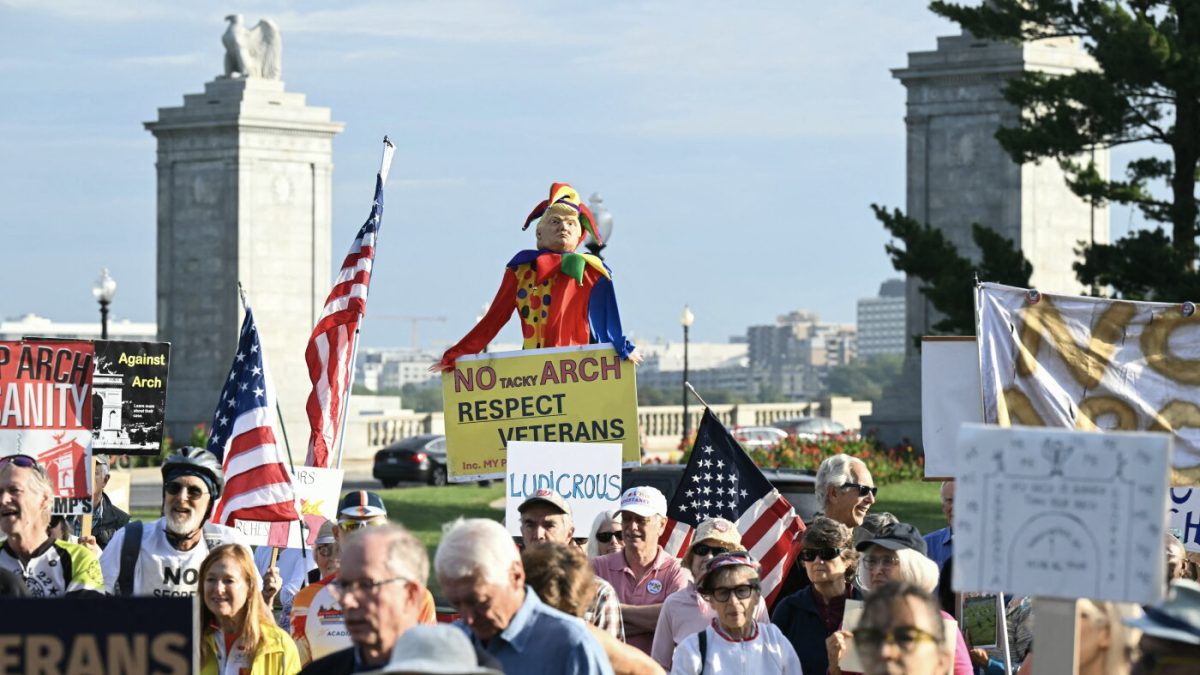
Dozens of activists rallied at Memorial Circle in Washington, D.C., during Thursday evening rush hour to protest a proposed 250-foot-tall arch honoring President Donald Trump, a structure they say would permanently alter the capital's skyline and its symbolic .
The demonstration drew protesters who framed the November midterm elections as their most realistic path to halting the project, rather than relying on federal review processes or courts. Organizers argued that flipping control of Congress could strip funding or permitting authority from a project they describe as a monument to one man imposed on a city that largely opposes him.
At 250 feet, the arch would stand taller than the Statue of Liberty's pedestal and roughly three-quarters the height of the Washington Monument, which tops out at 555 feet. The proposal has drawn comparisons to the Arc de Triomphe in Paris, though critics at the rally said the scale and placement raise questions about sightlines, federal land use, and who gets to decide what Washington commemorates.
Memorial Circle sits near the entrance to Arlington Memorial Bridge, a heavily trafficked corridor connecting the Lincoln Memorial to Arlington National Cemetery. Protesters chose the location for its rush-hour visibility, holding signs as commuters crossed the bridge during one of the busiest travel windows of the day.
One organizer told the crowd that legislative pressure, not public comment periods, would determine the project's fate. "The midterms are where this gets decided," the organizer said, according to accounts from the scene.
The arch is one of several large-scale construction and commemorative proposals associated with Trump that have moved through federal planning channels in recent years, including work on the White House grounds and changes to federal buildings in the District. Each has faced legal challenges and local opposition, but few have drawn street-level protests of this kind.
Washington's federal properties fall under the jurisdiction of agencies including the National Park Service and the National Capital Planning Commission, both of which review structures on or near the National Mall and adjacent federal land. The arch's proposed location and funding source have not been fully detailed publicly, leaving opponents to focus their strategy on the ballot box rather than administrative appeals.
The rally remained peaceful, with no arrests reported. Attendees said they planned to canvass in competitive House and Senate districts through the fall, tying the arch proposal to a broader argument about congressional oversight of federal construction projects.