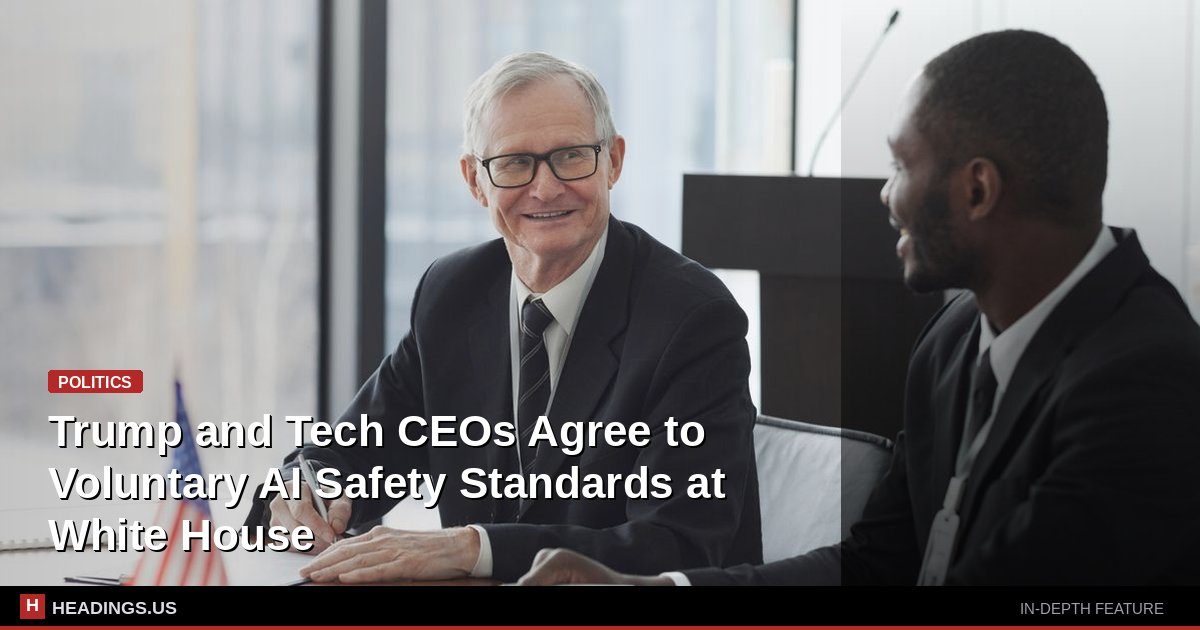
President Donald Trump and leaders from the nation's largest artificial intelligence companies agreed to a set of voluntary safety standards during a meeting at the White House, according to people familiar with the discussions. The agreement covers how companies will test and disclose risks tied to their most powerful AI systems.
The commitments are not legally binding. Companies that signed on can withdraw at any time, and no federal agency was given new authority to enforce the standards. The deal instead relies on the companies to police themselves.
Executives from major AI developers attended the meeting, though the full list of participants was not immediately released. The White House framed the agreement as a first step toward addressing concerns about rapid advances in AI, including the technology's potential to spread disinformation, displace workers, and be misused in cyberattacks.
"We're moving quickly, but we're moving responsibly," Trump said during the meeting, according to a pool report. He said the voluntary approach would keep the United States ahead of competitors abroad, particularly China.
The agreement comes as Congress has struggled to pass AI legislation. Lawmakers have introduced dozens of bills over the past two years covering AI transparency, child safety, and deepfake protections, but none have reached a floor vote. The lack of federal action has pushed states to act on their own. Colorado, California, and Texas have passed AI laws in the past year, creating a patchwork of rules that companies say is difficult to follow.
Critics said voluntary standards fall short. "A handshake deal is not a safeguard," said one consumer advocacy group representative who was briefed on the meeting. "These companies have every incentive to move fast and disclose little."
The agreement does not address AI's use in weapons systems, surveillance, or hiring decisions, areas where civil rights groups have pressed for stricter oversight. It also leaves open how companies will report safety incidents to the government, if at all.
Tech industry groups largely welcomed the news. A spokesperson for one major trade association said the agreement "reflects the industry's commitment to safety without slowing innovation."
The White House said it plans to reconvene the group in several months to review progress. Whether the standards will be made public in full was not clear. Officials declined to say when the companies would begin reporting under the new framework.
The move echoes earlier voluntary efforts, including the Biden administration's 2023 AI safety commitments, which more than a dozen companies signed. Many of those pledges went unfulfilled or were later revised, according to a review by outside researchers.