President Donald Trump said the United States will begin obtaining diesel fuel from Russia, reversing years of American sanctions pressure on Moscow as the White House moves to bring down pump prices ahead of the November midterm elections.
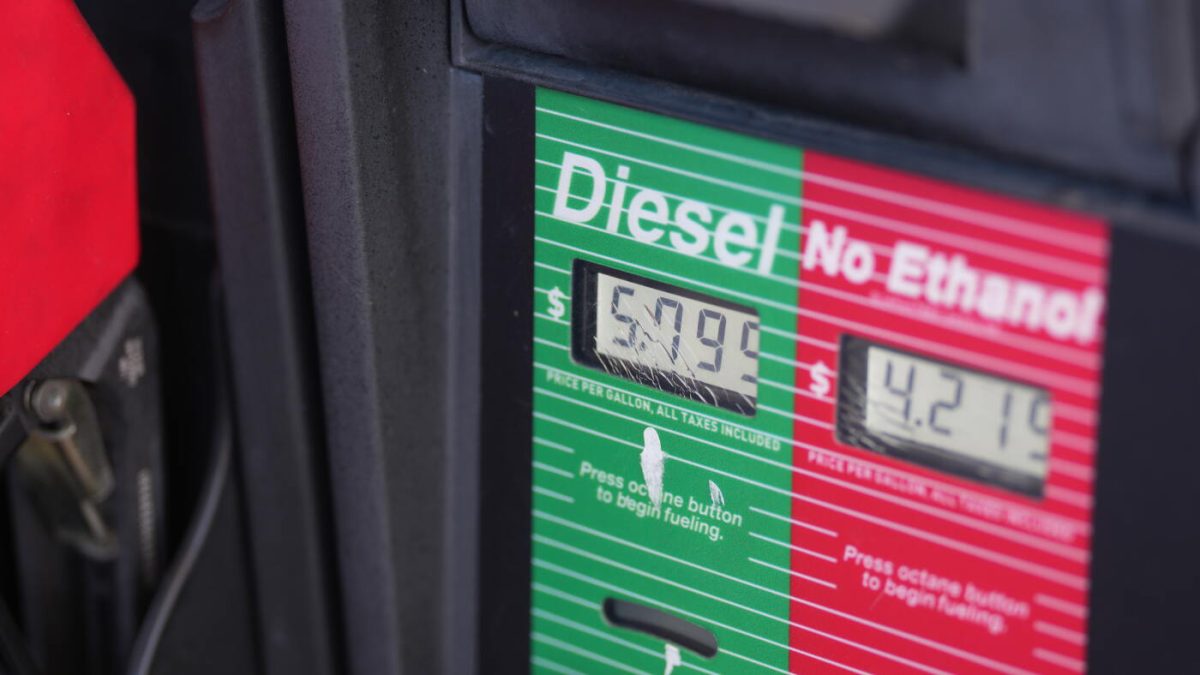
The announcement marks a sharp break from U.S. energy policy dating to 2014, when Washington and its allies imposed sanctions on Russia's oil sector after the annexation of Crimea. Diesel prices have climbed steadily through 2018, with the national average topping $3.20 a gallon in October, according to AAA, up roughly 45 cents from a year earlier. Diesel costs feed directly into trucking, farming, and rail freight, so they raise the price of nearly everything consumers buy.
Trump framed the move as a straightforward response to fuel costs. "We're going to get diesel from Russia," he said, describing the arrangement as a deal that would ease pressure on American drivers and businesses. He did not provide details on volume, pricing, or timing.
Russian diesel would flow into a U.S. market that consumes about 4 million barrels per day, according to the Energy Information Administration. Russia is already one of the world's largest diesel exporters, shipping roughly 900,000 barrels per day abroad, mostly to Europe. Redirecting even a fraction of that supply to the United States would require tanker capacity and could take weeks to arrange.
The political timing is not incidental. Republicans hold narrow Senate majorities and face a difficult House map in November, and rising gasoline and diesel prices have been a persistent drag on the president's approval ratings. Trump has publicly pressured OPEC and Saudi Arabia for months to increase crude output, with limited success.
Lawmakers from both parties have criticized the idea of easing restrictions on Russia. Sanctions on Moscow's energy sector were tightened in 2017 under the Countering America's Adversaries Through Sanctions Act, which passed the Senate 98-2 and the House 419-3. Any move to waive or work around those measures would draw congressional scrutiny.
The White House did not say whether the diesel imports would be structured as a formal deal, a waiver of existing sanctions, or a commercial arrangement between private companies. The Treasury Department, which administers most Russia sanctions, has not issued guidance on the matter.
Diesel futures on the New York Mercantile Exchange traded near $2.30 a gallon in recent sessions, well above the five-year average of roughly $1.90. Analysts at the EIA projected in October that retail diesel prices would average $3.24 a gallon in 2019, the highest since 2014.