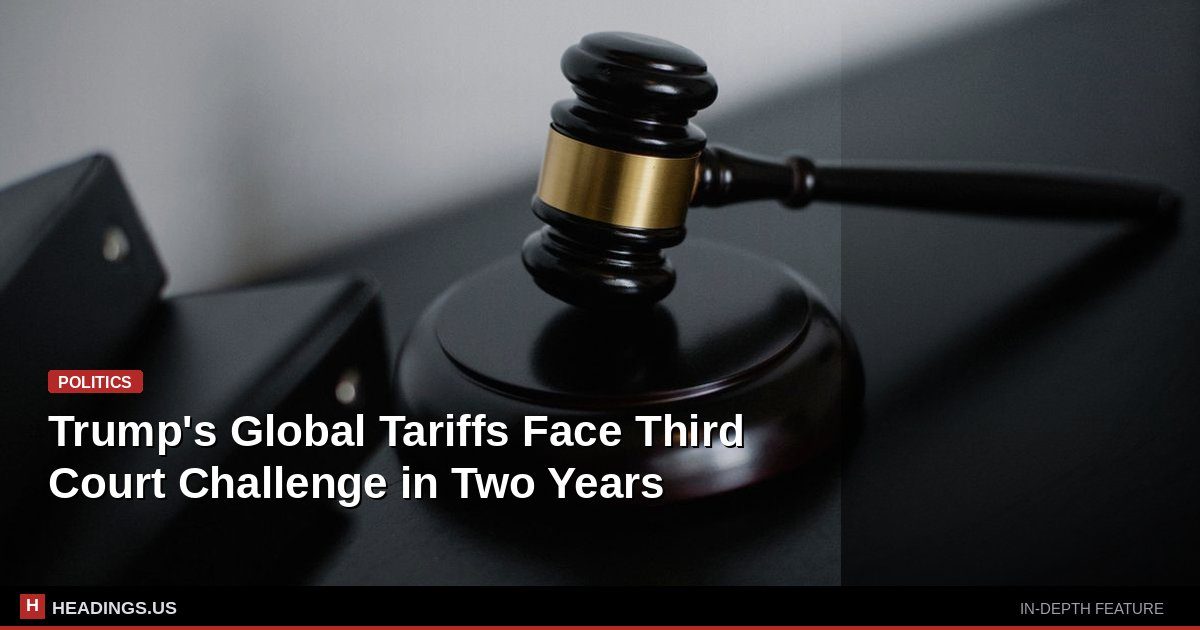
A panel of three judges at the U.S. Court of International Trade in Manhattan heard arguments Wednesday in the latest legal challenge to President Donald Trump's sweeping global tariff policy.
A group of small businesses and Democratic-led states claims Trump's "Section 301" tariffs — which impose 10% or 12.5% rates on goods from 86 countries — overstep his legal authority. The tariffs cover 99.4% of all U.S. imports.
It marks the third time in less than two years that courts have been asked to intervene against the president's tariff regime.
The Trump administration justified the tariffs by saying the targeted countries failed to effectively enforce bans on goods produced with forced labor. But attorney Pratik Shah, representing the challengers, told the court that a "constellation of factors" revealed the government's stated reason was a "pretext."
"We know this was not the only reason that they did this," Shah said.
One judge pushed back immediately. "So what?" she asked, probing whether the government having additional motivations would be enough to strike down the tariffs.
Shah argued that the administration's "unprecedented" use of Section 301 — imposing similar-sized tariffs on dozens of economies in "one fell swoop" after a shortened investigation — fails to meet the statute's requirements. He said the government must demonstrate that each country's trade practices are unreasonable and burden American commerce.
The case carries major stakes for global trade. The tariffs affect nearly every imported product entering the United States, from electronics to clothing to industrial components. If the court rules against the administration, it could force a rollback of duties that have reshaped supply chains and raised costs for importers nationwide.
The challengers include small businesses that say the tariffs have driven up their operating costs, as well as Democratic-led states that argue the president cannot unilaterally impose taxes on imports without congressional approval.
This is not the first time Section 301 tariffs have landed in court. Previous challenges have tested whether the president's broad interpretation of trade law can withstand judicial scrutiny. The outcome of Wednesday's hearing could determine whether the latest round of tariffs survives or faces removal.
The judges did not indicate when they would issue a ruling. Both sides are expected to file additional briefs as the case moves forward.