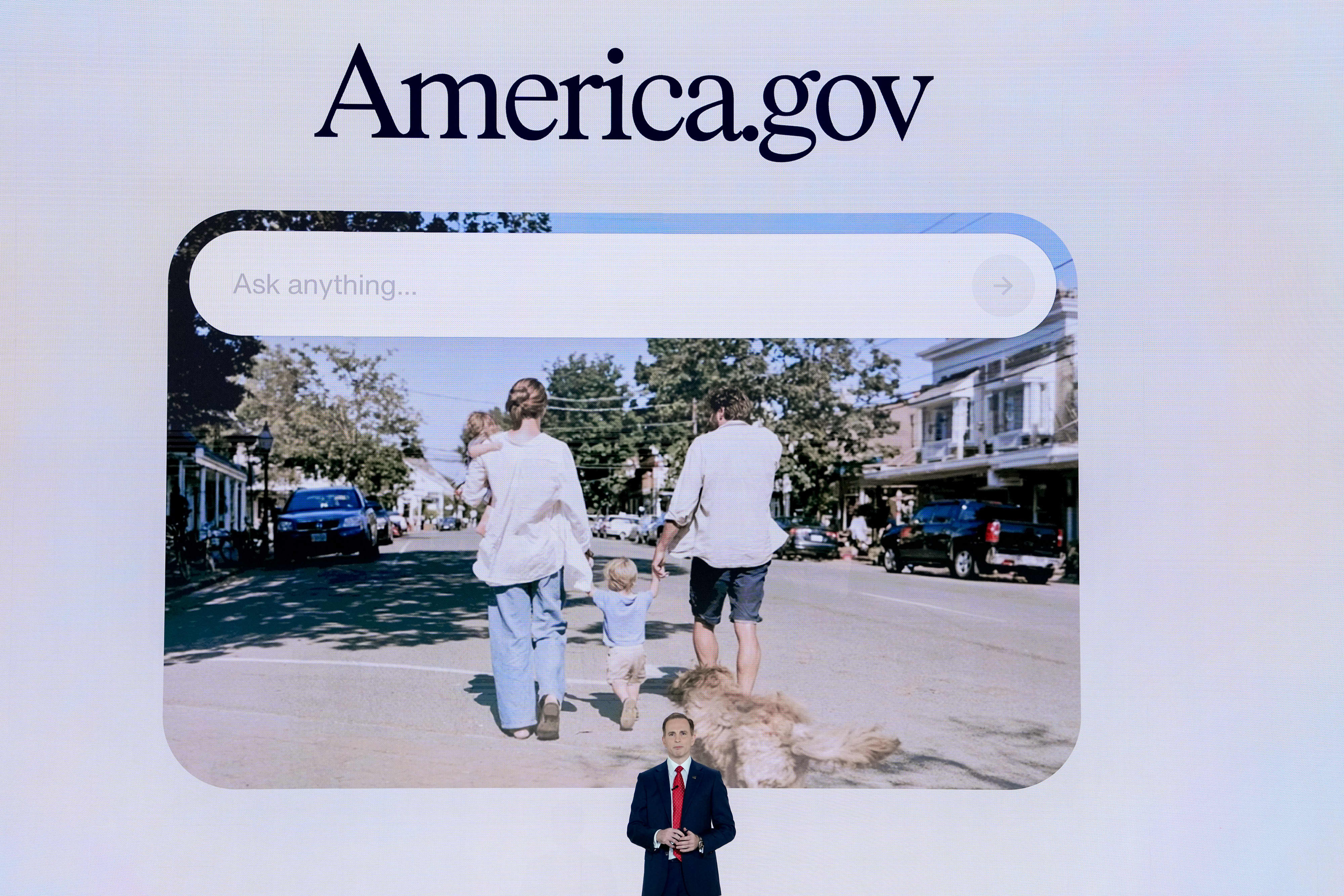
President Donald Trump announced Tuesday that the White House is launching America.gov, an AI chatbot designed to help Americans find government services and information. Google confirmed it is a partner on the launch and that its Gemini model is involved. It is unclear whether other AI companies contributed.
"Instead of forcing citizens to search through the endless maze of tens of thousands of government websites and rules... you'll now have one front door for every single question," Trump said in a post on X.
The chatbot's stated purpose is to consolidate the federal government's sprawling online presence into a single point of contact. Agencies currently operate thousands of separate websites covering everything from tax filing to visa renewals to food stamp applications.
The announcement raises immediate questions about accuracy. Large language models are prone to hallucinations, generating confident but false information. CNN recently reported that the U.S. military nearly launched an armed operation against a Chinese vessel it believed was carrying nuclear weapons components. The mission was aborted at the last minute after officials realized the supposed threat was an AI hallucination.
While a chatbot error is unlikely to trigger a military strike, the stakes for ordinary users remain high. Americans could turn to America.gov for guidance on applying for food stamps, renewing visas, or filing taxes. Incorrect answers in those cases could mean missed deadlines, denied benefits, or financial penalties.
The White House has not detailed how it will verify the chatbot's responses or what recourse users would have if they receive bad information. Google's involvement suggests the system will rely on Gemini's existing infrastructure, though the company did not say how it would handle government-specific data or accountability.
Trump framed the launch as a modernization effort, arguing that the current system forces citizens to bureaucratic complexity. The chatbot is live, though it's unclear how many agencies have integrated their services or how its answers are.
Similar AI deployments in government have drawn scrutiny over transparency and error rates. The launch of America.gov puts a consumer-facing AI tool directly in the path of millions of Americans seeking essential services, with little public detail about testing, oversight, or what happens when the system gets something wrong.