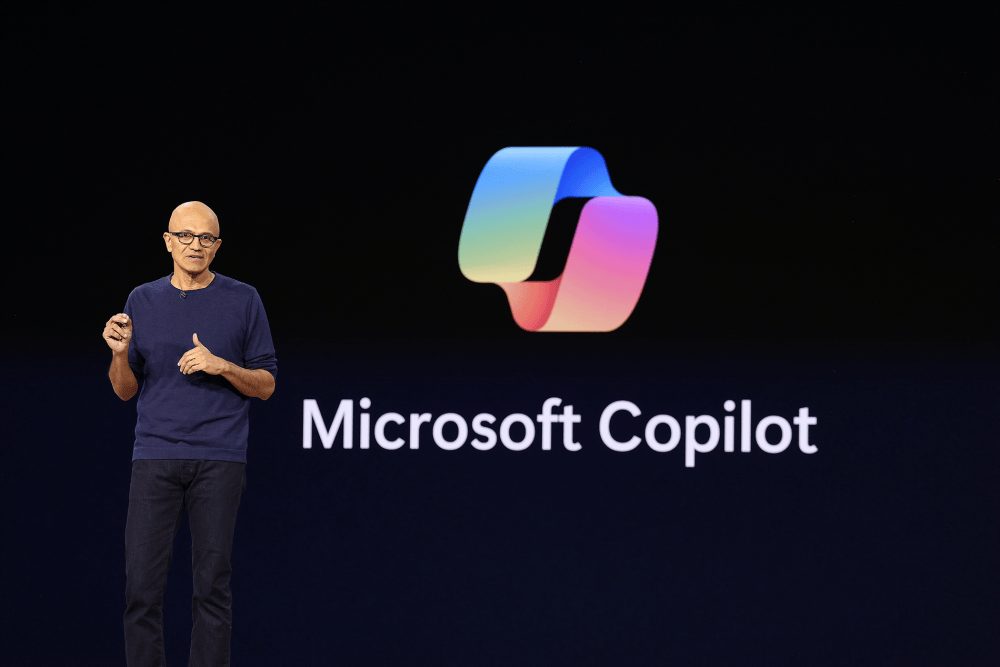
Microsoft CEO Satya Nadella said artificial intelligence systems need an "emergency brake" that can halt a model when it stops behaving as intended, becoming the latest major tech executive to call for stronger safety controls on the technology his company is racing to deploy.
Nadella's proposal centers on what he called a "trust architecture" — a set of safeguards built around AI models rather than bolted on afterward. He argued that companies cannot simply deploy powerful systems and accept their outputs without independent verification.
"We can't treat Super Intelligence as a set of nested black boxes and simply accept or reject its recommendations," Nadella said, urging the industry "to step back and assess the trust architecture."
The practical fix, according to Nadella, means separating the model from the harness that orchestrates its work — the surrounding software that feeds it instructions, tools, and data. Under that design, the harness could detect erratic behavior and cut the model off before it causes harm, functioning as the brake Nadella described.
His comments arrive as leading AI developers have acknowledged a growing number of incidents in which they appeared to lose control of their own models. Microsoft has invested roughly $13 billion in OpenAI, whose ChatGPT ignited the current AI boom after its November 2022 launch, and Microsoft's Copilot products now sit inside Windows, Office, and GitHub, putting the company's AI in front of hundreds of millions of users.
Nadella's framing echoes the argument that model weights and the software controlling them should be governed separately — an idea gaining traction as AI agents are given authority to send emails, write code, and execute transactions with limited human oversight. Without a kill switch at the orchestration layer, a malfunctioning agent could act faster than any person could intervene.
Microsoft is not alone in pushing the message. OpenAI, Google DeepMind, and Anthropic have each published safety frameworks in the past two years, and governments have moved in parallel: the European Union's AI Act entered into force in August 2024, and the White House issued an executive order on AI safety in October 2023.
Nadella did not specify a timeline for implementing the brake concept or say whether Microsoft would build it into its own products. The company reported $245.1 billion in revenue for its 2024 fiscal year, with AI services driving much of its cloud growth — a business that depends on customers trusting the systems to behave.