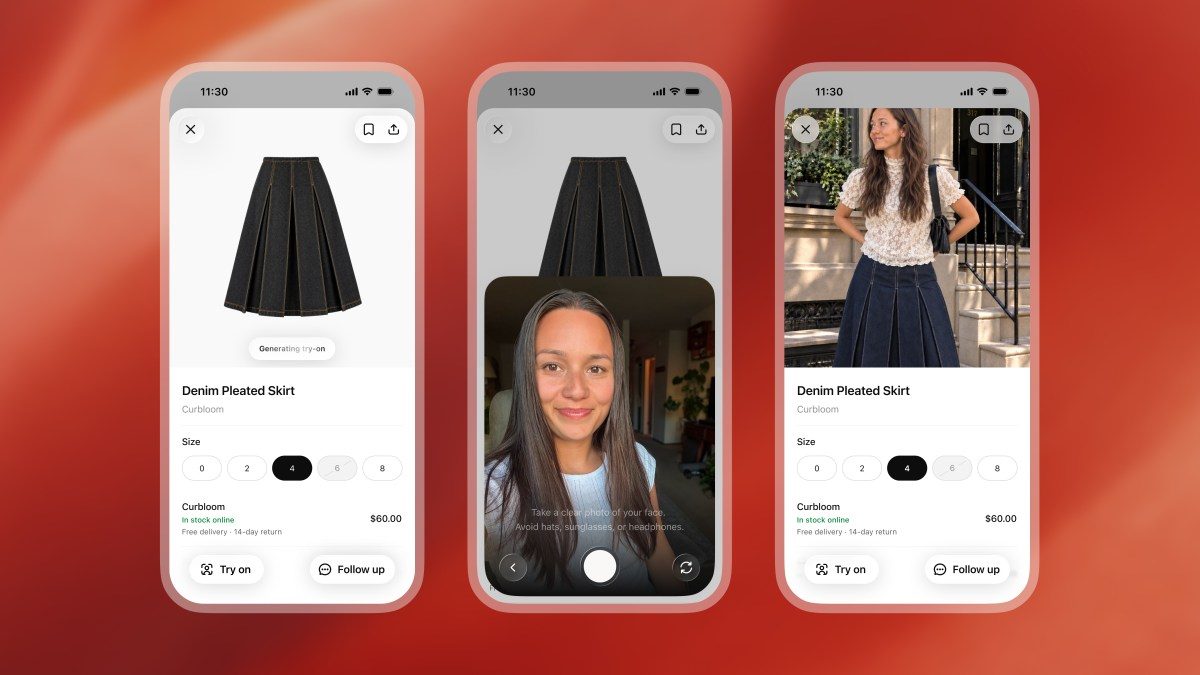
OpenAI has added a virtual clothing try-on feature to ChatGPT, letting users generate images of themselves wearing garments without physically trying them on. The tool turns the chatbot into a direct competitor to the fitting rooms and styling services that apparel retailers have spent years building.
The feature works by having users upload a photo of themselves and a picture of the clothing they want to see, after which ChatGPT generates a composite image showing how the item would look on their body. It builds on the image-generation capabilities OpenAI has been expanding inside ChatGPT, which already allows users to edit photos and create visuals from text prompts.
The move puts OpenAI in competition with a growing field of virtual try-on startups and retailer tools. Google introduced a similar feature in 2023 that lets shoppers see apparel on AI-generated models with a range of body types, and Amazon has tested virtual try-on for shoes and clothing through its mobile app. Those efforts aim to cut down on returns, which cost U.S. retailers an estimated $100 billion or more annually, according to industry estimates.
For shoppers, the appeal is speed: no trip to a store, no ordering three sizes and shipping two back. For OpenAI, the feature is another step toward making ChatGPT a place where users complete tasks rather than just ask questions — a shift that has already brought the company into competition with search engines, coding assistants, and now retail tools.
The feature arrives as OpenAI faces mounting pressure to turn ChatGPT's massive user base into revenue. The company has rolled out shopping-related features in recent months, including product recommendations and links that let users buy directly through the chatbot.
Virtual try-on technology has historically struggled with accuracy, particularly around how fabric drapes and how garments fit different body shapes. OpenAI has not detailed how its version handles those problems or whether it will work reliably across the wide range of body types and lighting conditions in user photos.
The company has not said whether the feature will carry a cost for free-tier users or be limited to paying subscribers, nor whether it will eventually connect directly to retail inventories so users can buy the items they preview.