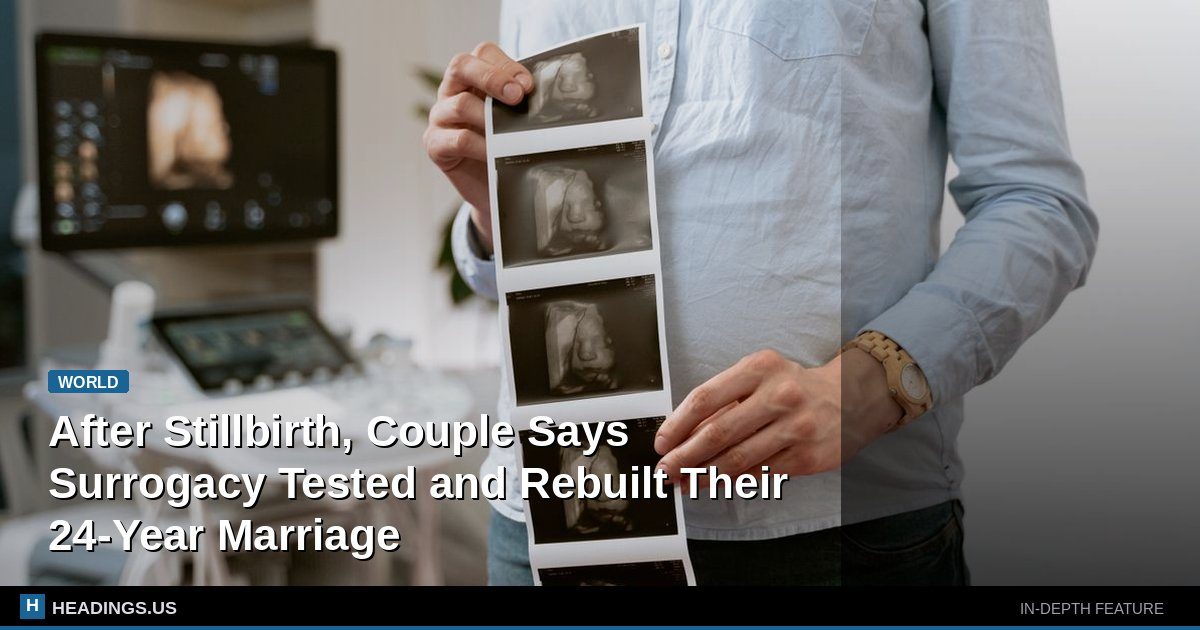
A first surrogacy attempt that ended in stillbirth pushed a couple's 24-year marriage to the brink, writer Kristina Kasparian said in a personal essay published Tuesday in Self magazine.
Kasparian wrote that friends assumed she and her husband, Ethan, would survive the loss because they were the "most together couple" they knew. She was not so sure. For months, she said, the two moved through their home like strangers, their paths rarely crossing. At one point, Ethan closed a door on her without realizing she was standing behind him.
The essay describes a relationship worn down long before surrogacy entered the picture. Kasparian has endometriosis, adenomyosis and early menopause, conditions she said went undiagnosed for decades while a medical system dismissed her symptoms.
Those years reshaped the marriage. Her illness strained their intimacy, derailed her career and left Ethan in the role of caretaker. The delay in diagnosis also depleted her ovarian reserve, she wrote, leading to repeated miscarriages through IVF and intrauterine insemination.
Kasparian said she carried guilt over the burden placed on her husband. Still, the couple held onto what she called the joie de vivre they had shared since they met, until they turned to surrogacy.
The decision to use both an egg donor and a surrogate was, in her words, an act of compromise. She described herself as once ambivalent about motherhood, but said the idea of raising a child with Ethan slowly filled her with tenderness and curiosity.
The essay does not say whether the couple has since had a child. It focuses instead on what the process exposed about their relationship.
Roughly 2 percent of U.S. births now involve some form of assisted reproduction, according to federal data, and surrogacy remains among the least common paths. The emotional toll on intended parents is less studied than the medical risks, and first-person accounts like Kasparian's have become a rare window into that experience.
Kasparian wrote that she and Ethan had weathered life-altering challenges together in their 20s and 30s. Surrogacy, she said, was different. It did not just test their endurance. It forced them to decide whether they still wanted each other.
The essay's headline frames the outcome as a paradox: surrogacy nearly destroyed the marriage, and it also brought the couple back. Kasparian does not offer a tidy resolution. She describes two people who had to relearn how to find each other in the dark.