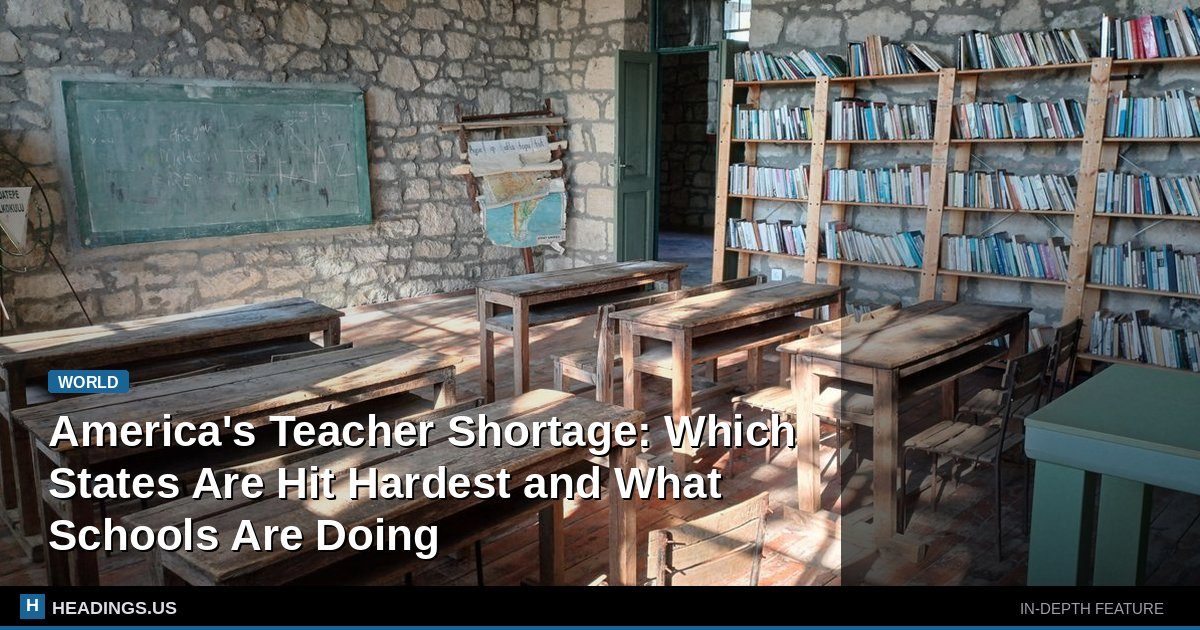
The math teacher position at a rural middle school in Nevada sat open for nine months. Administrators posted it four times, raised the starting salary twice, and eventually filled it with a long-term substitute who had never taught algebra. That school is not an outlier. It is the new normal in dozens of districts across the country.
Teacher shortages in the United States are not a single crisis. They are a patchwork of local emergencies, and the severity depends heavily on where you live, what subject you teach, and how much money your district can spend.
The National Picture
According to the U.S. Department of Education's most recent data, 86 percent of public schools reported difficulty hiring teachers for the 2023-24 school year. That figure has hovered near record highs since the pandemic, and it has not returned to pre-2020 levels.
The Learning Policy Institute, a nonpartisan research organization, estimates that roughly 55,000 teacher positions across the country are either vacant or filled by underqualified instructors. That number fluctuates, but the trend line is clear: districts are hiring people who are not fully certified at higher rates than at any point in the last two decades.
What makes the shortage unusual is that it is not evenly distributed. Some states have more applicants than openings. Others are running on fumes.
Which States Are Hit Hardest
The states struggling most share a few common traits: lower teacher pay relative to the cost of living, large rural populations, and weak teacher preparation pipelines.
Nevada consistently ranks near the bottom. The state has one of the highest student-to-teacher ratios in the country, and its teacher turnover rate exceeds 20 percent annually in some districts. Clark County, which includes Las Vegas, has reported thousands of unfilled positions in recent years.
Arizona has struggled for years with a combination of low pay and high attrition. The state legislature has passed several rounds of raises, but educators point out that the increases have not kept pace with inflation. Arizona also has one of the highest rates of emergency-certified teachers in the nation.
Oklahoma made national headlines for allowing schools to move to four-day weeks, partly as a cost-saving measure tied to staffing. The state issues thousands of emergency teaching certificates each year, meaning people without full credentials are standing in front of classrooms.
Mississippi, Alabama, and West Virginia round out the list of states with the most severe shortages, particularly in rural districts where recruiting is hardest. West Virginia has closed or consolidated schools in some counties not because of declining enrollment but because there were not enough teachers to staff them.
California and Texas, despite their size and resources, also report significant shortages in specific areas. California's shortage is concentrated in special education, math, science, and bilingual education. Texas has a similar pattern, with urban districts faring better than rural ones.
Why It Keeps Getting Worse
The reasons are not mysterious. Teacher pay has stagnated in real terms for decades. According to the Economic Policy Institute, teachers earn about 20 percent less than similarly educated professionals in other fields. That gap has widened over time.
Working conditions have also deteriorated. Surveys from the RAND Corporation and other research groups show that teachers cite large class sizes, lack of administrative support, and the politicization of curriculum as major reasons for leaving the profession.
And the pipeline is shrinking. Enrollment in teacher preparation programs dropped by roughly a third between 2010 and 2020. It has stabilized somewhat since, but it has not recovered to earlier levels.
"We are asking teachers to do more with less, and then we are surprised when they leave," said one district superintendent in rural Oklahoma. "The shortage is not a mystery. It is a math problem."
What Schools Are Actually Doing
Some districts are finding solutions that work, even if they are not glamorous.
Grow-Your-Own Programs
Instead of recruiting from out of state, districts are training their own. Programs that identify paraprofessionals, substitutes, and community members and help them earn teaching credentials have shown real promise. The approach works best when the district covers tuition and provides mentorship.
Apprenticeships and Residencies
Teacher residency programs, modeled partly on medical residencies, pair aspiring teachers with experienced mentors for a full year while they earn a stipend. Districts in California, Colorado, and Tennessee have expanded these programs. Retention rates for residency graduates are significantly higher than for teachers who enter through traditional routes.
Four-Day Weeks
More than 800 school districts nationwide have moved to four-day schedules, according to tracking by news outlets and education researchers. The reasons vary, but staffing is often a factor. The trade-off is real: parents scramble for childcare, and students lose instructional time. Some districts report that the schedule helps with recruitment, but the evidence on academic impact is mixed.
Pay Raises and Housing Support
Some states have passed significant raises. New Mexico increased teacher salaries substantially and saw improvements in hiring. In expensive areas, districts are experimenting with subsidized housing for teachers. A district in California converted an old motel into teacher housing. It is a small fix for a big problem, but it helps.
Alternative Certification
Many states have loosened requirements for entering the classroom. This fills seats quickly but raises concerns about quality. The research on alternative certification is mixed. Teachers who receive strong mentorship and ongoing training tend to perform well. Those who are simply handed a classroom and left alone often do not.
What Parents and Community Members Can Do
The shortage is not something any single person can solve, but there are practical steps that make a difference.
- Show up to school board meetings. Budget decisions and salary schedules are set locally. Public comment matters more than most people realize.
- Support bond measures and levies. Many districts cannot raise pay without voter approval. These measures often fail by small margins.
- Volunteer in classrooms. Even a few hours a week reduces the burden on teachers and keeps them from leaving.
- Encourage young people to consider teaching. The profession needs advocates, not just critics.
- Push back on misinformation. When curriculum battles dominate local news, teachers feel attacked. Supportive communities retain teachers better than hostile ones.