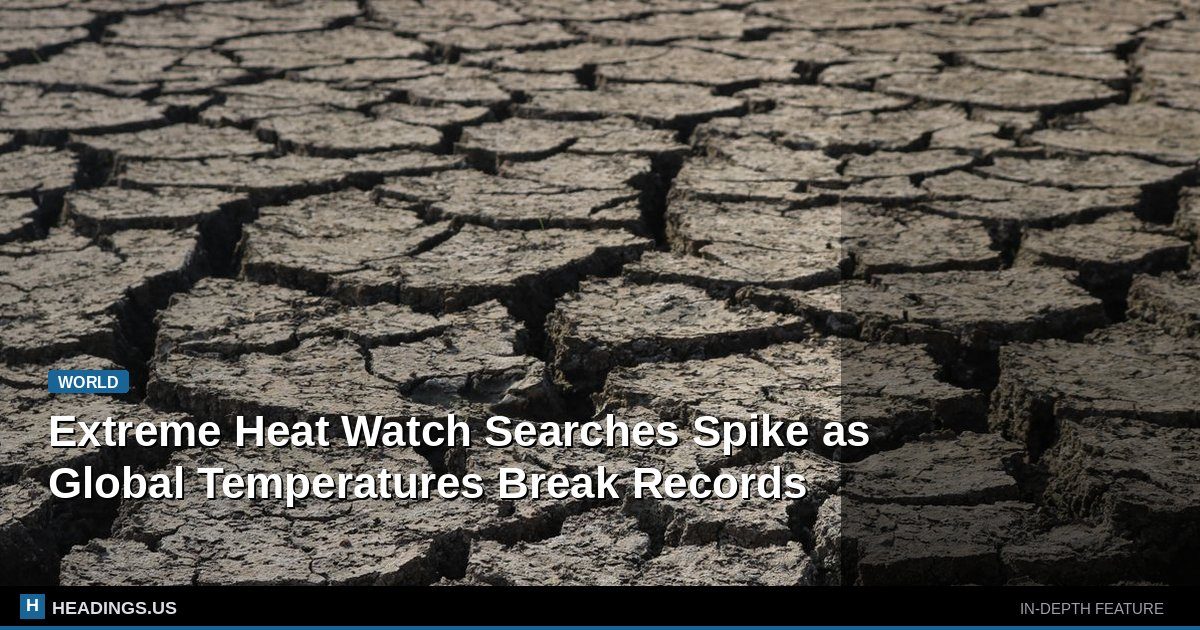
Google searches for "extreme heat watch" spiked sharply this week as record-breaking temperatures swept across multiple continents, driving millions of people to seek information on heat warnings and safety measures.
The surge in search traffic coincided with heat advisories issued across parts of the United States, southern Europe, and Asia. Officials in several countries urged residents to limit outdoor activity and check on elderly neighbors.
The National Weather Service issued excessive heat warnings for large portions of the southwestern United States, where temperatures pushed past 110 degrees Fahrenheit in cities including Phoenix and Las Vegas. Forecasters warned that overnight lows offered little relief, compounding health risks for people without air conditioning.
In Europe, authorities in Spain, Italy, and Greece activated heat emergency plans as temperatures climbed above 40 degrees Celsius (104 Fahrenheit) in several regions. Greek officials closed archaeological sites during peak afternoon hours to protect tourists and workers.
The World Meteorological Organization has repeatedly warned that heat waves are becoming more frequent, more intense, and longer-lasting due to climate change. Scientists say the trend is driven primarily by the burning of fossil fuels, which traps heat in the atmosphere.
Heat is among the deadliest weather hazards. The Centers for Disease Control and Prevention reports that more than 1,200 people in the United States die from extreme heat each year, a figure that researchers say is likely an undercount.
Search interest in heat-related terms typically rises alongside temperatures, but this week's spike stands out for its geographic breadth. Data from Google Trends showed queries climbing simultaneously across North America, Europe, and parts of East Asia, suggesting a synchronized global heat event rather than a localized spike.
Emergency officials recommend staying indoors during the hottest hours, drinking water frequently, and avoiding strenuous activity. They also warn against leaving children or pets in parked vehicles, where interior temperatures can reach dangerous levels within minutes.
Cities across the affected regions opened cooling centers and extended pool and library hours. Some utilities urged customers to conserve power during peak demand to prevent grid strain as air conditioning use soared.
Forecasters expect the heat to persist in several regions through the weekend, with little sign of significant relief. Public health officials say the coming days will test emergency response systems already stretched by successive heat events this year.