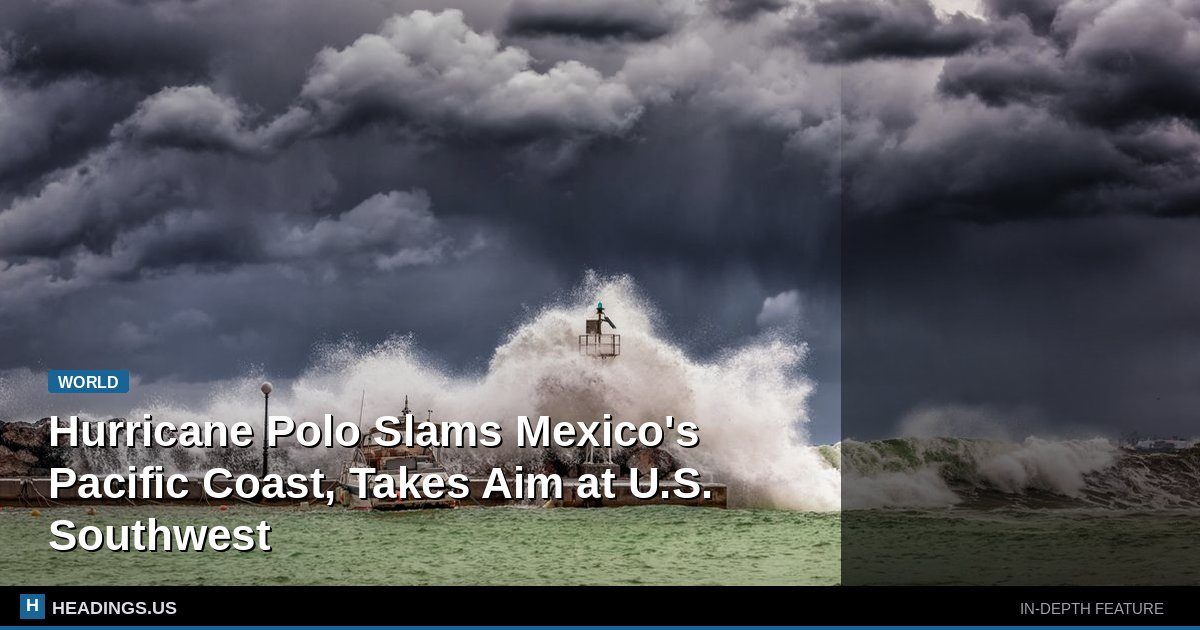
Hurricane Polo slammed into Mexico's Pacific coast and is now tracking north toward the U.S., where it threatens to dump heavy rain across the Southwest, CBS News reported.
The storm made landfall along Mexico's western shoreline, lashing coastal communities with strong winds and heavy surf before weakening as it moved inland. Forecasters are watching its remnants closely as they push toward the U.S. border.
Polo is expected to impact the southwestern United States in the coming days, according to the network's storm track. The exact timing and intensity remain uncertain, but the system is projected to carry moisture into Arizona, New Mexico and parts of Southern California.
That kind of setup is a familiar one for the region. Pacific hurricanes and their leftovers routinely send surges of tropical moisture into the desert Southwest, a pattern meteorologists call a surge of monsoon moisture. When it collides with the region's mountainous terrain, it can trigger sudden and dangerous flooding.
Forecasters warn that flash flooding is the primary concern, not wind. Desert soil absorbs little water quickly, and normally dry washes and canyons can fill within minutes. Roads that cross those channels become deadly traps during heavy rain.
Residents in low-lying areas and near burn scars from recent wildfires face the highest risk. Scorched ground repels water instead of soaking it up, which can turn modest rainfall into fast-moving debris flows.
Mexico's coastal states took the brunt of Polo's initial punch. Authorities there have not yet released a full damage assessment, and it was not immediately clear whether anyone was injured or killed.
The storm's path puts it in a long line of Pacific systems that have crossed into the U.S. In 2023, Hurricane Hilary became the first tropical storm to reach Southern California in decades, prompting the National Hurricane Center to issue its first-ever tropical storm watch for that area.
Officials urge residents in the projected path to monitor local forecasts and have a plan if evacuation orders are issued. Drivers should never attempt to cross flooded roadways, since moving water can sweep away vehicles in a matter of feet.
Polo is the latest named storm in what has been an active Pacific hurricane season. The National Oceanic and Atmospheric Administration had projected above-normal activity for the eastern Pacific this year.
Further updates on Polo's track and any U.S. watches or warnings are expected as the system moves north.