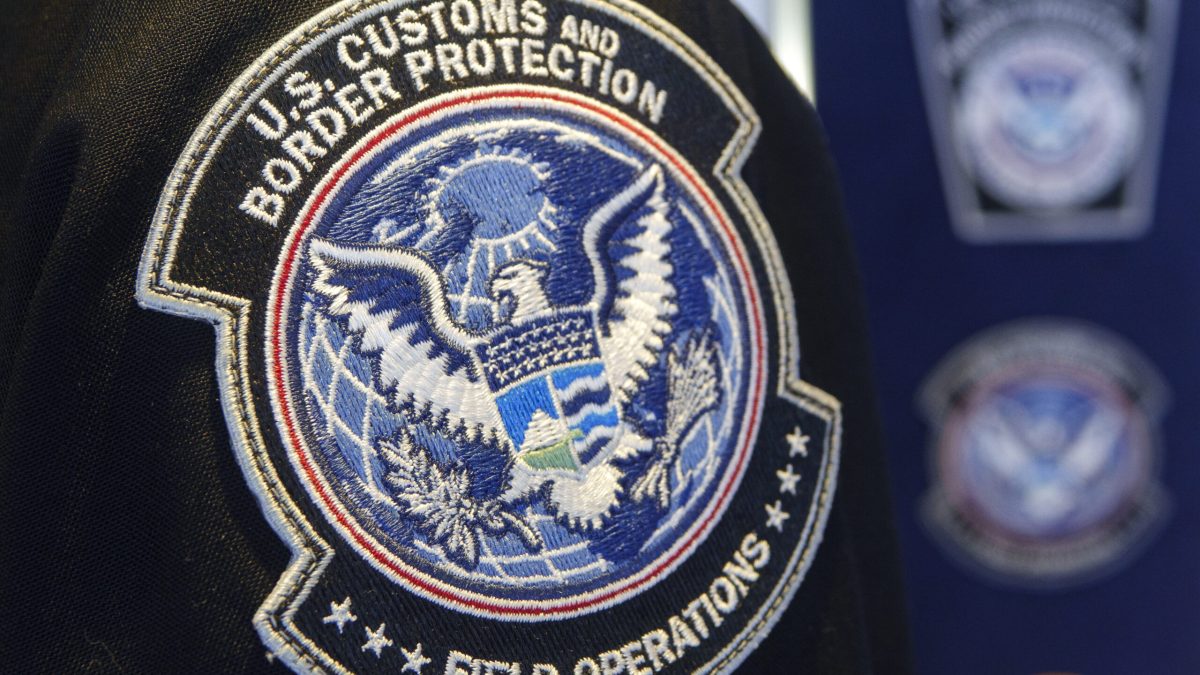
U.S. Customs and Border Protection can search your smartphone or laptop without a warrant when you re-enter the country, a warrantless authority that applies to American citizens and does not require any suspicion of wrongdoing.
The searches fall under the border-search exception, a legal doctrine that treats the international arrival area at airports as a zone where the Fourth Amendment's normal probable-cause standard is relaxed. CBP reported roughly 41,000 electronic device searches in fiscal year 2024, up from about 18,000 in fiscal 2017, according to agency statistics.
Agents can demand passwords or biometric unlocks, and refusing to cooperate does not stop the search — it can trigger detention, device seizure, and questions about why the traveler is unwilling to hand over the phone. Devices are typically held for days or weeks before being returned.
Civil liberties attorneys say the practice is especially dangerous for journalists, immigration organizers, and anyone whose phone contains sensitive client or source information. In one documented case, a traveler identified as Kennedy said a CBP agent pressured her at the airport after she declined to unlock her phone.
"[The agent] threatened me, saying that if I didn't give him my phone, my interrogation was going to take much longer," Kennedy said. "I felt like I had no choice, so I handed my phone to the CBP agent."
Kennedy said she believes she was singled out because of her activism. "I believe CBP flagged me because of my organizing and political work around immigrants' rights in Florida," she said.
Two categories of searches exist: manual, where an agent scrolls through the device, and forensic, where specialized software extracts a full copy of texts, photos, contacts, and app data. Forensic searches are far less common but far more invasive, and CBP's own directives require supervisory approval for them.
Travelers can take steps to limit exposure. Security researchers recommend powering the phone off before landing, since a cold device requires a passcode rather than a fingerprint or face scan, and clearing sensitive apps or using a travel-only phone.
Senators Ron Wyden of Oregon and Rand Paul of Kentucky have introduced legislation that would require a warrant for border device searches, but the bill has not received a floor vote. Courts have split on how far the exception extends to phones, leaving the rules unsettled for travelers passing through U.S. airports.