Traders on the prediction market Kalshi put an 87% probability that the AAA national average for gasoline will still be above $4 per gallon on Election Day, according to pricing on the platform. That leaves drivers little prospect of meaningful relief at the pump before they cast ballots.
The same traders do expect some decline from current levels, but not enough to push the national average back below the $4 threshold. Gas prices peaked at $4.56 per gallon in late May, after a spike in March tied to the start of the Iran war and a second run-up later in the spring.
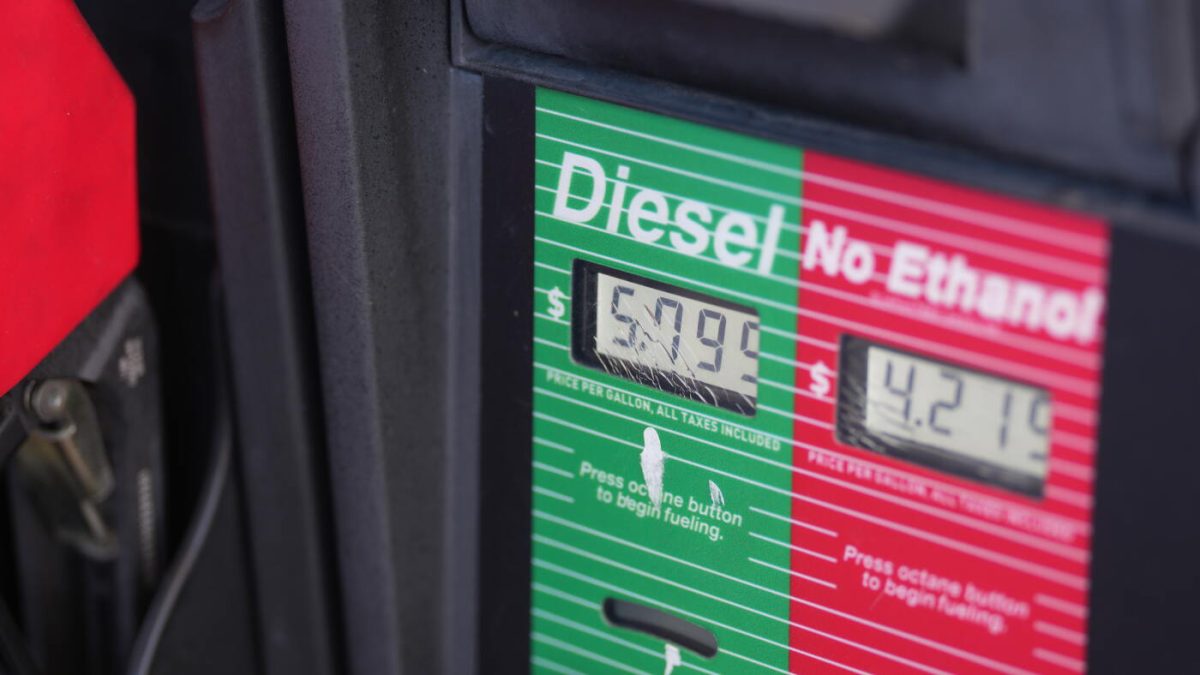
Diesel has been the sharper pain point. The price hit nearly $6.53 per gallon on Sept. 22 — a new peak — before easing to $6.28. Traders on Kalshi are pricing only a limited further retreat in diesel as well.
Fuel costs at this level feed directly into household budgets and into the cost of moving freight, which shows up in grocery and retail prices within weeks. The national average above $4 means a 15-gallon fill-up costs roughly $60 or more, money that comes out of discretionary spending.
The political stakes are visible in the same markets. As gas prices have stayed elevated, Democrats' odds of flipping the Senate have improved to 63% on Kalshi, up from earlier in the cycle. That reading suggests traders see voter frustration over pump prices as a drag on Republicans heading into Nov. 5.
Kalshi is a regulated event-contract exchange where participants buy and sell positions on specific outcomes, and its prices are commonly read as a real-time probability estimate. An 87% contract price implies traders collectively assign roughly a one-in-eight chance that gas falls below $4 by Election Day.
The May peak of $4.56 stands as the high-water mark of this cycle. Since then, prices have drifted lower in fits and starts, but never far enough to break the $4 floor that has defined the year for most drivers.
Diesel's September record matters beyond passenger cars. Trucking fleets, farms and construction companies buy diesel in bulk, and sustained prices near $6.50 per gallon raise operating costs across the supply chain. The modest drop to $6.28 offers little relief at that scale.