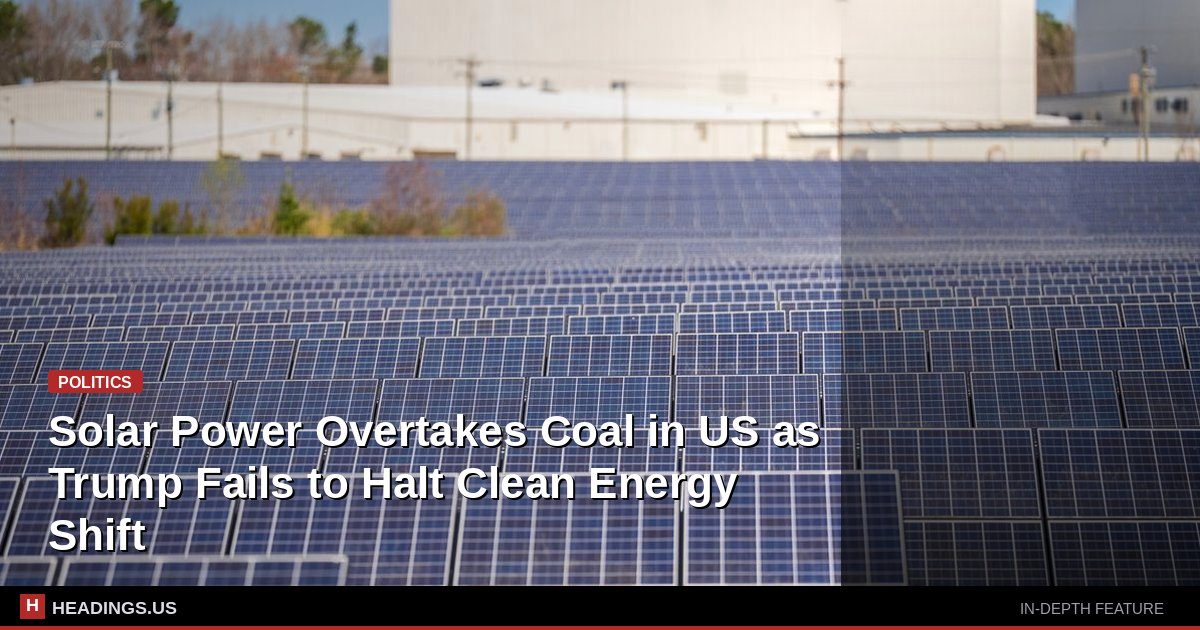
Solar power now generates more electricity than coal in the United States, according to federal energy data, marking a permanent shift in how the country powers its grid.
The milestone comes despite President Trump's executive order directing the JH Campbell coal plant in Michigan to remain open. That plant, like dozens of others across the country, has struggled to compete economically with cheaper renewable sources.
The Energy Information Administration reports that utility-scale solar production surpassed coal-fired generation for the first time on a sustained basis. The trend has accelerated as utilities retire aging coal facilities rather than invest in costly upgrades.
Coal's decline is driven primarily by economics, not regulation. Natural gas and renewables now cost less per megawatt-hour than coal in most markets, making continued operation of older plants financially unviable without government subsidies.
Trump campaigned on reviving the coal industry and has repeatedly promised to protect mining jobs. But market forces have proven more powerful than federal intervention. Since 2010, more than 500 coal-fired units have retired or announced plans to close nationwide.
The JH Campbell plant in West Olive, Michigan, was slated for closure before Trump intervened. Its operator, CMS Energy, had determined the plant was no longer economically viable. The facility continues operating under the federal directive, but its long-term future remains uncertain.
Meanwhile, solar installations have surged. The Solar Energy Industries Association reports that solar accounted for more than half of all new electricity generating capacity added to the US grid in recent years. Installation costs have dropped roughly 90 percent over the past decade.
This shift carries significant implications for American energy policy. States and utilities are planning investments around renewables regardless of federal posture. Power purchase agreements, corporate sustainability commitments, and state renewable portfolio standards continue to drive demand.
Analysts say the transition is now self-reinforcing. As more solar comes online, economies of scale drive prices lower, making coal even less competitive. Battery storage improvements address reliability concerns that once slowed renewable adoption.
For consumers, the shift means lower electricity costs in many regions. For coal communities, it means continued economic disruption. The tension between these outcomes defines the current energy debate in Washington and state capitals alike.
Trump's attempt to keep the Michigan plant running illustrates the limits of presidential power over energy markets. Even with federal support, coal faces structural disadvantages that policy alone cannot overcome.
The question now is not whether the US will transition to cleaner energy sources, but how quickly and who benefits. Solar's rise past coal signals that transition is already well underway.