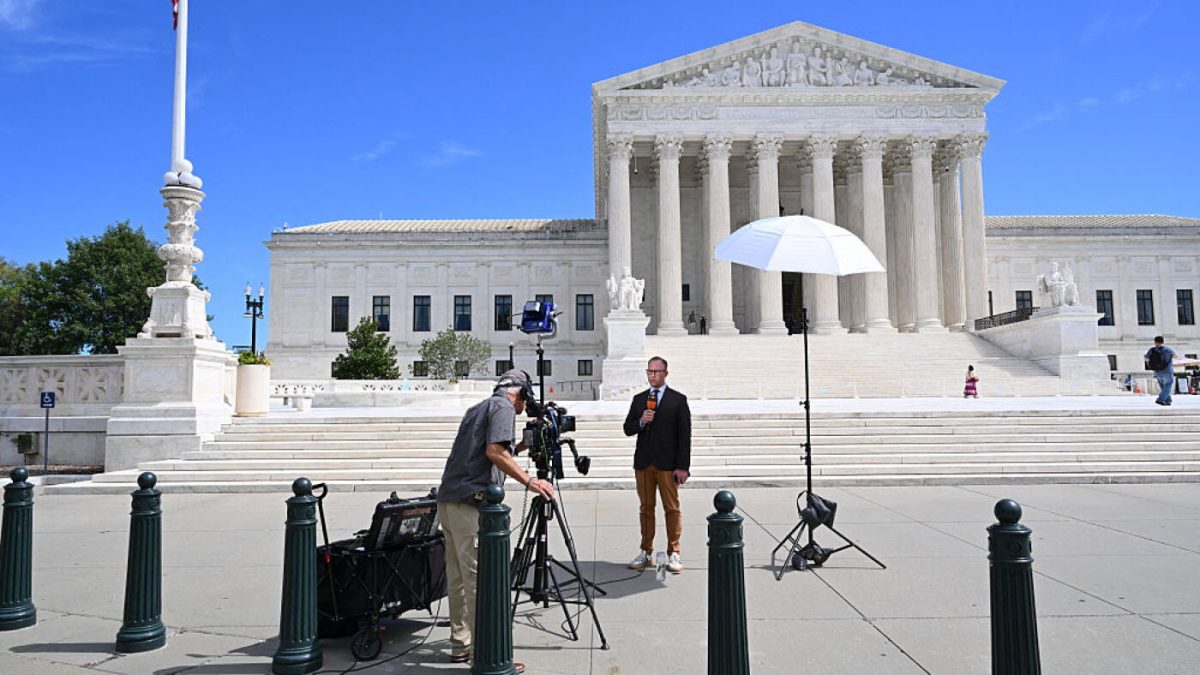
The Supreme Court begins its new term Monday with a docket that puts abortion, gun rights, and presidential power back before the nine justices, setting up a slate of rulings that could land in the middle of the 2026 midterm campaign.
The court will hear arguments in cases that test how far states can restrict abortion pills, whether federal rules on ghost guns and firearm accessories exceed congressional authority, and how broadly the president can shield himself from lawsuits and criminal process. Decisions in the highest-profile disputes are expected by late June, roughly four months before voters go to the polls.
The abortion case centers on whether a state can bar the mailing of mifepristone, a drug used in more than half of U.S. abortions, when the Food and Drug Administration has approved it for nationwide distribution. A ruling against the FDA's authority would affect patients in every state, not only those with restrictive laws.
On guns, the justices agreed to review a Biden-era rule treating unfinished firearm parts, known as ghost gun kits, as firearms that require serial numbers and background checks. The rule was struck down by a lower court, and the outcome will determine whether the kits remain widely available online without a license.
The presidential immunity question returns in a different form after the court's 2024 ruling that former presidents enjoy broad protection from prosecution for official acts. The new case asks whether that shield extends to civil suits seeking damages from a president's conduct in office.
Chief Justice John Roberts has presided over a court that has decided several landmark cases by 6-3 margins along ideological lines, including the 2022 decision overturning Roe v. Wade. Public approval of the court has hovered near historic lows in Gallup polling, with roughly 4 in 10 Americans saying they approve of its performance.
Justice Ketanji Brown Jackson, entering her fourth term, has emerged as a frequent dissenter in the court's conservative rulings. Justice Amy Coney Barrett, now the court's most junior conservative appointee, has at times broken with her colleagues on procedural questions.
The term also includes cases on environmental regulation, immigration detention, and the scope of federal agency power following the court's 2024 decision ending the Chevron deference doctrine, which had required judges to defer to agencies' interpretations of ambiguous statutes.