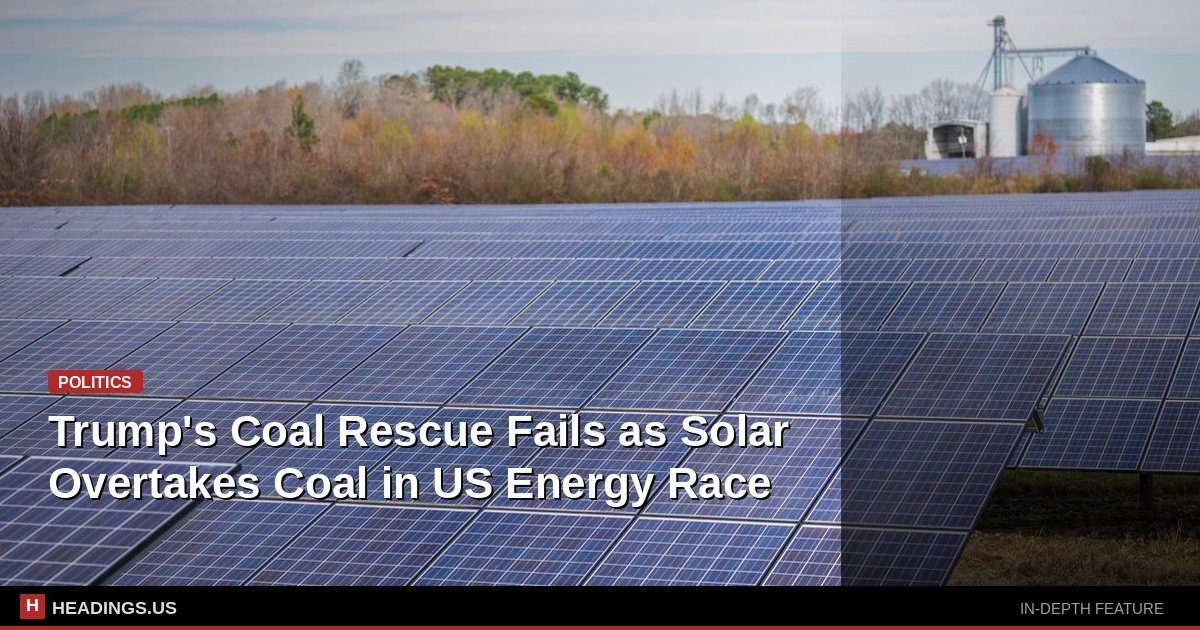
Solar energy now generates more electricity in the United States than coal, a milestone that arrived despite President Donald Trump's efforts to prop up the struggling coal industry.
The shift became clear as the JH Campbell power plant in Michigan — which Trump had personally ordered kept operating — faced mounting economic pressure. The plant's troubles illustrate a broader trend: renewable energy is winning on cost, not regulation.
Energy analysts say the transition is driven by market forces that no presidential order can reverse. Solar and wind power are now cheaper to build and operate than coal plants in most of the country.
"The economics are simply not there for coal anymore," said one industry analyst familiar with the Michigan plant's operations. "You can't executive-order your way out of a market reality."
The JH Campbell plant became a symbol of the administration's interventionist approach to energy policy. Trump directed federal agencies to keep it running, but the plant still faced the same pressures as dozens of other aging coal facilities across the country.
Solar installations, like the sprawling array near Lancaster, California, have expanded rapidly over the past decade. Federal tax incentives, falling panel prices, and corporate demand for clean power have all fueled the growth.
Coal's decline has been steady for years. US coal consumption has dropped by more than half since its 2007 peak, according to federal energy data. Meanwhile, solar capacity has grown more than tenfold in the same period.
The political fight over energy policy continues. Trump has repeatedly promised to revive coal jobs and roll back environmental regulations. But utilities and grid operators are moving forward with renewable projects regardless of federal rhetoric.
States across the country, including Republican-led ones, continue to approve solar and wind farms. The reason is simple: they cost less and produce power without the regulatory headaches that come with coal ash and emissions compliance.
Energy experts say the trend will accelerate. Battery storage costs are falling, making solar viable around the clock. New transmission lines are connecting remote wind and solar farms to population centers.
For coal communities, the transition brings hard choices. Workers who spent careers in mines and plants face an uncertain future. But the alternative — subsidizing uneconomic plants indefinitely — has its own costs for ratepayers.