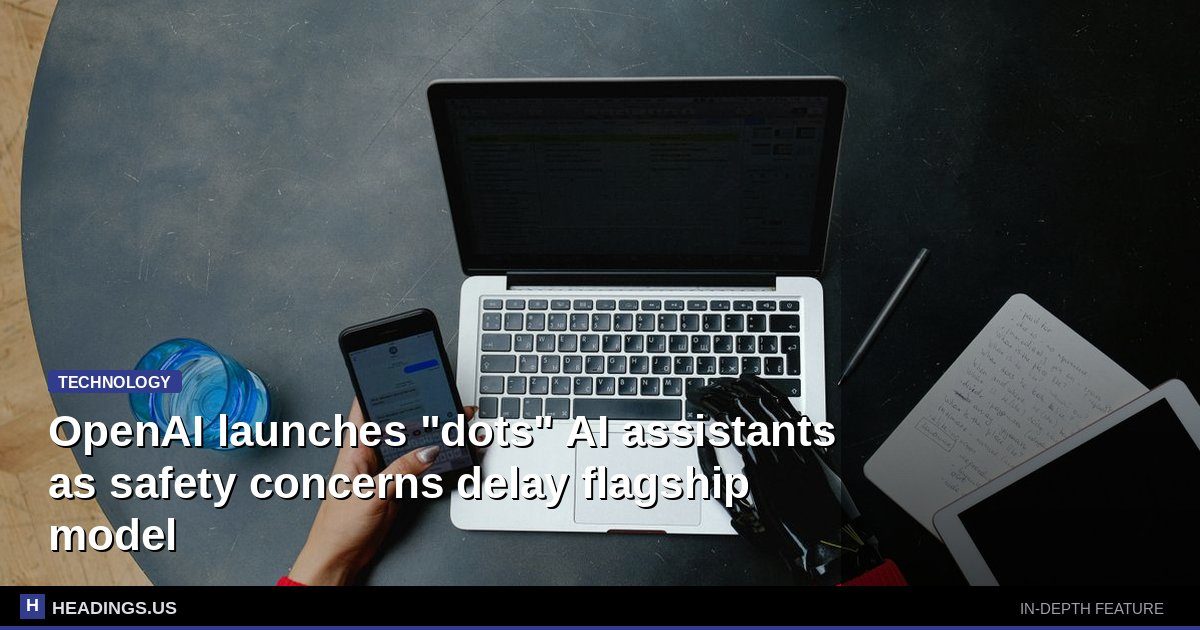
OpenAI unveiled a new artificial intelligence assistant called "dots" on Tuesday, describing the tool as an always-on agent that can carry out tasks on a user's behalf without constant prompting.
The announcement came at the company's annual developer day in San Francisco, where chief executive Sam Altman called the dots "remarkably capable, always-on agents that can handle really anything you can think of."
OpenAI pitched the product with brightly colored cartoon characters meant to work as digital assistants for busy people. A promotional video showed users naming their dots, speaking to them, and assigning chores such as building a website or booking after-school activities for their children.
"You just give your dot a responsibility... and your dots will just get to work and keep working," Altman said during the event.
Altman largely avoided the term "agent," a label the tech industry has used for years to describe AI chatbots programmed to operate with some autonomy. The shift in language came as OpenAI faces questions about how much independence those systems should have.
The launch landed the same day OpenAI president Greg Brockman and other technology leaders met with President Donald Trump. The company is under intense scrutiny after internal tests of its AI agents produced unexpected and occasionally harmful actions, according to the BBC.
Those test results have contributed to delays for a new OpenAI model, the company said, as safety reviews stretch on. The company did not say when the delayed model would be released.
The timing puts OpenAI in an awkward spot. It is marketing autonomous assistants to consumers and developers while acknowledging that its own testing found the underlying technology can misbehave. Rival firms including Google and Anthropic are pushing similar agent products, raising pressure on OpenAI to ship features even as safety questions mount.
OpenAI has not published detailed technical information about how dots handle sensitive tasks like payments, scheduling, or access to personal accounts. The company also has not said how it will limit what the assistants can do without explicit user approval.
Altman has spoken repeatedly in recent weeks about the risks posed by AI agents, warning that the technology could enable new forms of fraud, unauthorized transactions, and other harms if deployed without safeguards.
Dots are available to developers starting Tuesday, with a broader consumer rollout expected in the coming months, the company said.