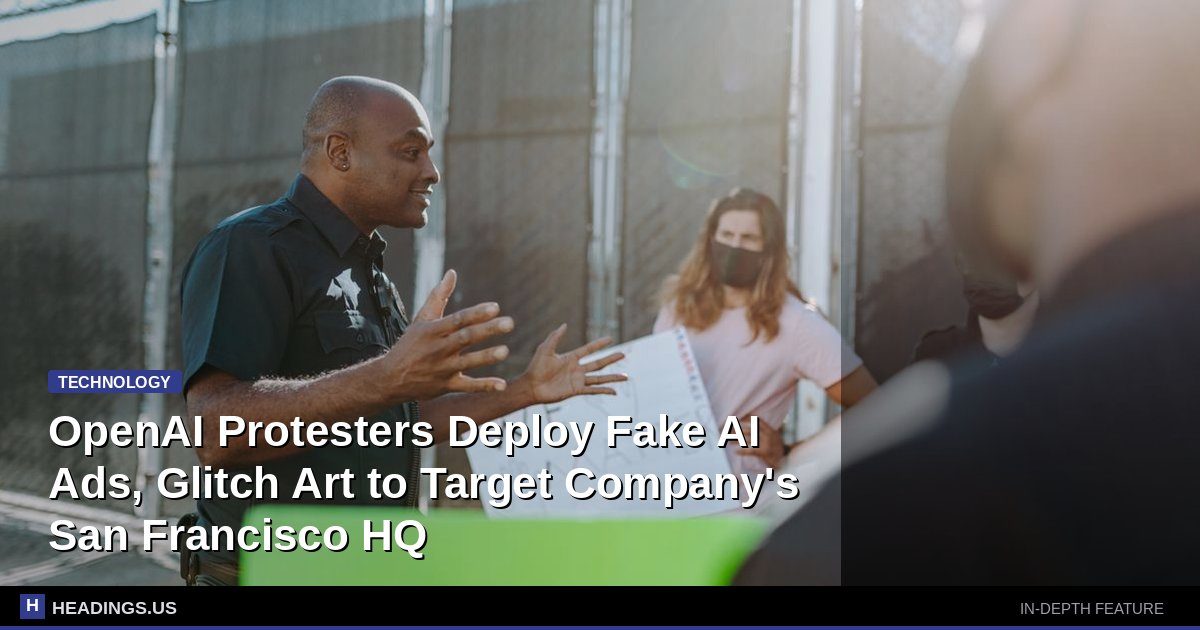
Protesters targeting OpenAI have moved beyond picket signs, deploying parody advertisements, projection art, and elaborate pranks to draw attention to their campaign against the artificial intelligence company.
The creative actions have taken place outside OpenAI's San Francisco headquarters in recent weeks, according to reports. Activists have projected messages onto buildings, created fake billboards mimicking the company's branding, and distributed satirical materials that critique OpenAI's approach to AI development and safety.
The protests reflect growing frustration among AI critics, artists, and former employees who argue the company has prioritized commercial interests over responsible development. The tension has intensified as OpenAI has rapidly expanded its products and partnerships while facing lawsuits and regulatory scrutiny.
"People are realizing that traditional protest isn't getting through," said one organizer involved in the actions, speaking to Ars Technica. The organizer said the goal is to reach tech workers and the public through methods that mirror the company's own marketing tactics.
OpenAI has not publicly commented on the specific protests. The company has previously said it takes safety concerns seriously and works with researchers and policymakers on responsible AI development.
The creative protests mark a shift in how critics are confronting major AI companies. Earlier demonstrations relied on open letters, shareholder resolutions, and traditional marches. The new approach borrows from guerrilla marketing and culture jamming, tactics long used against tobacco companies, oil giants, and other corporate targets.
Some of the actions have targeted OpenAI CEO Sam Altman directly. Protesters have staged mock events and distributed materials questioning the company's claims about artificial general intelligence and its nonprofit origins.
The protests come amid a broader reckoning for the AI industry. Regulators in the United States and Europe are drafting rules for AI systems. Artists and authors have filed copyright lawsuits against OpenAI and other companies. Former employees have publicly warned about risks they say the company is not addressing fast enough.
OpenAI's valuation has soared past $80 billion, and its ChatGPT product has hundreds of millions of users. That scale has made the company a focal point for debates about AI's impact on jobs, creative work, privacy, and misinformation.
It is unclear whether the creative protests will influence OpenAI's policies or public perception. But organizers say they plan to continue escalating their campaign, with more actions planned in the coming weeks.
"We're not going away," the organizer said. "If anything, this is just getting started."