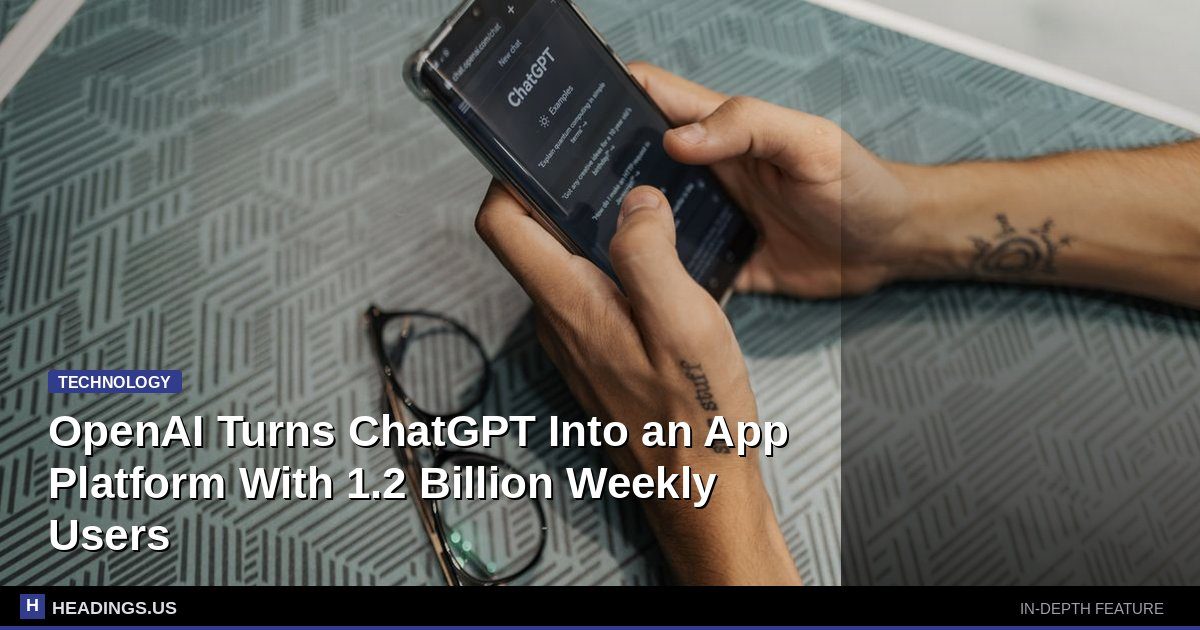
OpenAI is turning ChatGPT into an app store. The company announced a set of features at its Dev Day event Tuesday that let users discover, launch, and use third-party software directly inside the chatbot, which now claims 1.2 billion weekly users.
The move puts OpenAI in direct competition with Apple and Google, whose app stores have controlled how mobile software reaches consumers for nearly two decades. OpenAI's approach skips the download entirely, making the chatbot itself the distribution channel.
OpenAI also introduced a way for users to carry their ChatGPT identity into third-party apps and apply their existing AI usage allowance across those services. That means a user's ChatGPT account and credits work beyond OpenAI's own products.
The company has tested apps inside ChatGPT before, but Tuesday's announcements represent a more complete vision, according to TechCrunch, which first reported the details. The features build on OpenAI's agentic assistants, called Dots, and new AI models also unveiled at the event.
OpenAI has not fully exploited ChatGPT's potential as a discovery tool for AI-connected apps until now. With 1.2 billion weekly users, the chatbot carries distribution reach that rivals the largest consumer platforms.
The stakes are significant for developers. Apple and Google take commissions of up to 30% on app store transactions and set the rules for what software can be listed and how. An app ecosystem inside ChatGPT would give developers a path to consumers that bypasses those fees and restrictions.
Apple and Google have faced increasing regulatory pressure in the U.S. and Europe over their app store practices. A viable alternative distribution channel could weaken their negotiating position with developers and regulators alike.
OpenAI did not say when the new features would be available to all users or how developers can submit apps. The company also did not disclose what revenue-sharing terms, if any, would apply.
The announcements arrive as OpenAI faces mounting competition from Google, Anthropic, and others in the AI assistant market. Locking in developers and users through an app ecosystem could give OpenAI a defensive moat that model performance alone cannot provide.
For consumers, the shift could mean fewer app downloads and more tasks handled inside a single chat window. Whether that convenience outweighs the loss of choice that comes with a closed platform remains an open question.