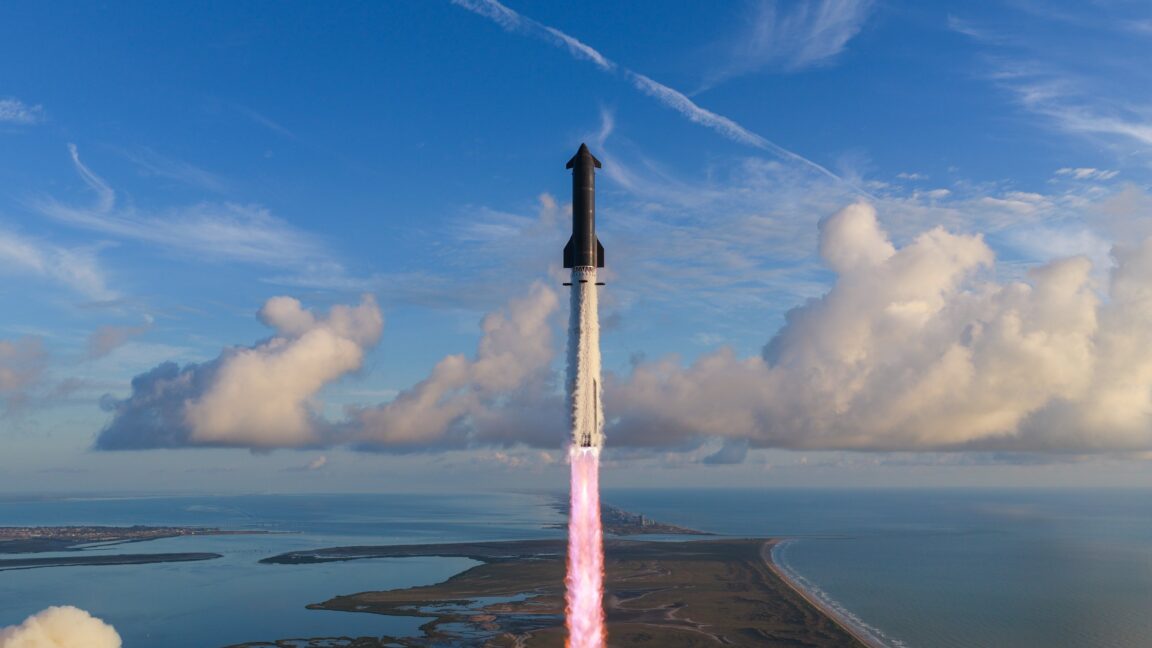
SpaceX's Starship rocket reached orbit and deployed its first payload of next-generation Starlink satellites, marking the most successful flight yet for the vehicle the company intends to make its workhorse.
The launch flew from SpaceX's Starbase facility in Boca Raton, Texas. The booster separated cleanly, the upper stage achieved orbital velocity, and the spacecraft released the Starlink units before splashing down as planned, according to the company.
It was the first time Starship has both reached orbit and delivered satellites, a milestone SpaceX has chased through a series of increasingly ambitious test flights. Earlier attempts ended in explosions or partial failures.
"This is the flight we've been working toward," a SpaceX spokesperson said after the mission. The company did not immediately release the exact number of satellites deployed or their final orbit.
The satellites are part of Starlink's next-generation constellation, designed to deliver faster speeds and lower latency than the current network. SpaceX has launched thousands of first-generation Starlinks, but the upgraded versions are built for heavier capacity and direct-to-cell service.
Starship is central to that plan. The rocket is designed to be fully reusable, with both stages returning to be flown again. SpaceX founder Elon Musk has said reusability is the key to driving launch costs down and enabling frequent flights.
NASA is also watching closely. The agency has contracted Starship to land astronauts on the moon under its Artemis program, and the orbital test moves that plan closer to reality. A crewed lunar landing depends on Starship proving it can fly reliably and refuel in orbit.
Saturday's flight did not include an in-orbit refueling test, which remains a critical hurdle. SpaceX has said it plans to demonstrate ship-to-ship propellant transfer on a future mission.
The Federal Aviation Administration, which licenses commercial launches, confirmed the flight operated within its approved parameters. The agency has required SpaceX to investigate any anomalies before issuing new licenses.
SpaceX has not announced a date for the next Starship flight. The company is expected to review data from this mission before setting a schedule.
For now, the successful deployment gives SpaceX a validated path for putting its own hardware into orbit with the rocket it built to replace Falcon 9. That shift, if it holds, would reshape how the company launches satellites and how NASA sends people back to the moon.