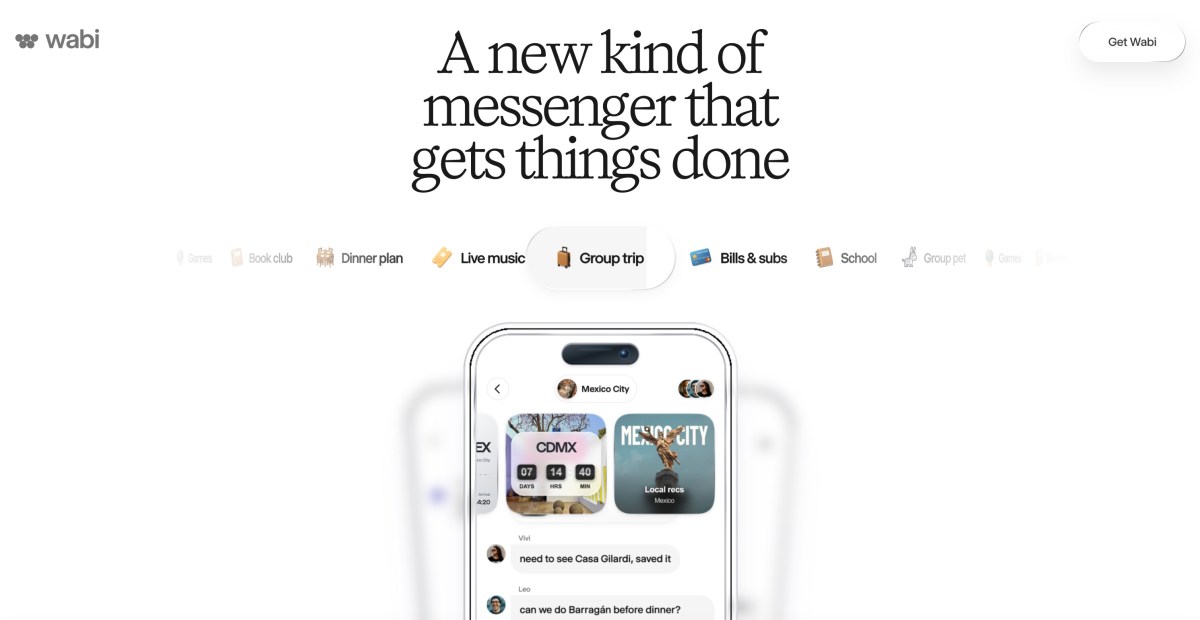
Wabi, the AI startup that let users build apps through text prompts, is pivoting into a messaging product. The company announced this week that its platform is becoming an AI messenger called Wabi 2.0, one that can still create apps on the fly to help users complete tasks.
The shift comes as demand surges for AI agents like Meta's Muse and Instinct. Wabi founder Eugenia Kuyda framed the new product as a "personal agent that does stuff for you and builds the interface you need in the moment."
Kuyda previously founded Replika, the AI companion app that drew millions of users and widespread media attention. Wabi launched with a promise that anyone could describe an app in plain language and have it built automatically, no coding required.
Wabi 2.0 keeps that core capability but changes how people reach it. Instead of opening a dedicated app-building tool, users interact through a messenger interface that generates whatever tools or screens a task requires. The company describes the product as an operating system for the "agentic era," software that adapts to users' lives and gets things done.
The new version is invite-only for now. Wabi has not said when it will open access more broadly or how much it will charge.
The pivot reflects a broader reckoning in the AI app market. Tools that made app creation itself the main attraction have struggled to hold users once the novelty fades. Meanwhile, agentic assistants that take actions on a user's behalf have pulled in heavy investment and attention from every major tech company.
Meta's Muse and Instinct are among the agents driving that shift, and Wabi's move positions it to compete in the same arena rather than remain a niche app-builder.
Kuyda's track record cuts both ways. Replika built a devoted user base but also faced criticism over how it handled emotional attachments between users and their AI companions. That history could shape how users and regulators view a product built around an always-available personal agent.
Wabi has not disclosed user numbers for the original product or revenue figures. The company also has not said whether existing Wabi users will be migrated to the new messenger or whether the original app-building tool will remain available.
For now, the company is betting that the future of AI software is not an app you open, but a conversation that builds what you need. Whether users follow that bet is the question Wabi 2.0 will answer.