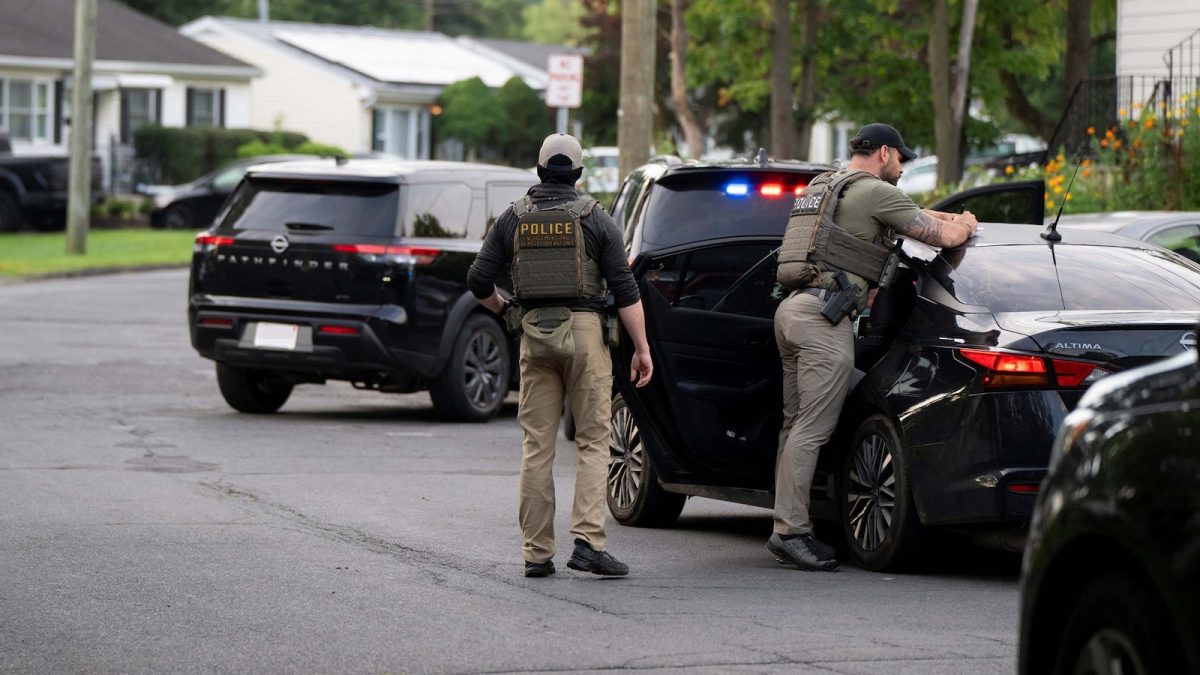
Immigration and Customs Enforcement will restrict vehicle stops to specially trained officers, Department of Homeland Security Secretary Kristi Noem announced, after two fatal ICE shootings within days of each other earlier this summer in Texas and Maine.
The policy change narrows who on an ICE enforcement team is authorized to initiate a traffic stop, pulling the tactic away from the full field force and into the hands of officers who receive additional instruction. It applies across ICE field operations, which conduct arrests in all 50 states.
The two shootings happened back-to-back, an unusually compressed timeline for use-of-force deaths involving a federal immigration agency. One occurred in Texas, the other in Maine. ICE has not released a public accounting of how many shots were fired in either case or whether the officers involved remain on duty.
The Maine shooting killed Renee Good, whose family has since sued the U.S. government over her death. The lawsuit adds legal pressure on DHS at the same moment the department is rewriting its own rules for when agents may stop a car.
Vehicle stops are among the most dangerous encounters in policing. Officers approach a driver who may be armed, may not speak English, and has not been searched. Federal immigration agents historically have relied on traffic stops to find people in the country without legal status, often working from intelligence about a specific vehicle rather than random patrols.
Critics of ICE enforcement have argued for years that traffic stops by immigration agents create confrontation risk with little public safety payoff, since the underlying offense is civil immigration status rather than a crime. Supporters counter that vehicle stops are how agents locate people who have already been ordered removed and have evaded arrest.
DHS has not said how many officers will lose stop authority under the new limits or what the additional training covers. The department also has not published a timeline for when the restriction takes effect.
The announcement lands as ICE continues large-scale arrest operations in major cities, including Minneapolis, where agents have staged out of the Bishop Henry Whipple Federal Building. Traffic stops have been a visible part of those operations, drawing protests outside detention facilities and courthouses.
Whether the new limits reduce fatal encounters will depend on enforcement, which falls to ICE field offices that have broad discretion over daily tactics. The agency has not said how it will track compliance or whether violations carry discipline.