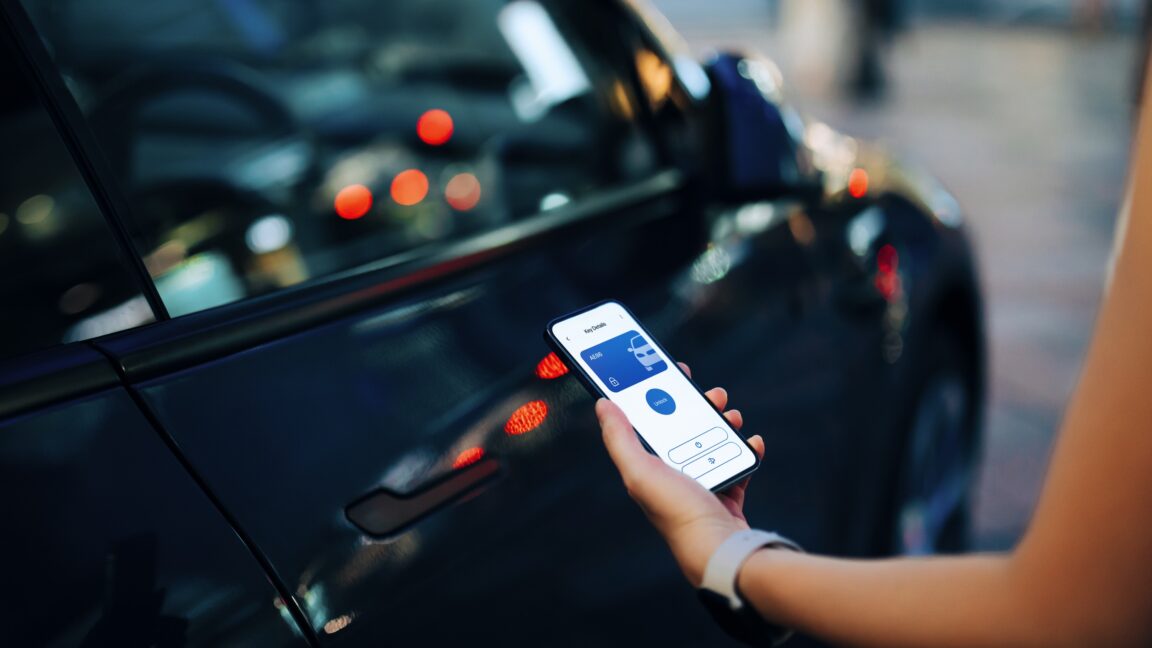
Connected cars collect and share driver data with a sprawling network of third parties, including insurers, advertisers, and data brokers, according to a study examining the privacy practices of major automakers.
The research, first reported by Ars Technica, found that vehicles equipped with internet connections transmit information about driving habits, location, speed, and even biometric data to companies far beyond the manufacturer.
Automakers have increasingly built cellular modems and sensors into new vehicles, turning them into rolling data-collection devices. The study maps how that information flows from the car to the company and then to outside buyers.
Data shared can include acceleration patterns, braking behavior, trip routes, and how often a driver exceeds the speed limit. Some automakers sell this information to insurance companies, which use it to set rates.
The report raises questions about whether drivers understand what they are agreeing to when they buy or lease a connected vehicle. Privacy policies are often buried in lengthy contracts, and opting out can be difficult or impossible.
Federal regulators have taken notice. The Federal Trade Commission has signaled interest in how automakers handle consumer data, and lawmakers have introduced bills aimed at giving drivers more control over information collected by their cars.
Consumer advocates say the findings underscore a gap in U.S. privacy law. Unlike Europe's General Data Protection Regulation, the United States has no single federal standard governing how companies collect and sell personal data from vehicles.
Automakers argue that data collection improves safety and enables features like automatic crash notification and remote diagnostics. But critics say the scope of sharing goes well beyond what is needed to keep cars running.
The study arrives as automakers ramp up production of electric and software-defined vehicles, which rely even more heavily on connectivity. That shift is expected to expand the volume and variety of data collected.
For now, drivers who want to limit data sharing have few options. Some manufacturers allow owners to disable certain connected services, but doing so can cut off features like navigation and emergency assistance.
The report calls for clearer disclosure and stronger consent requirements, arguing that drivers should know who receives their data and why before they get behind the wheel.