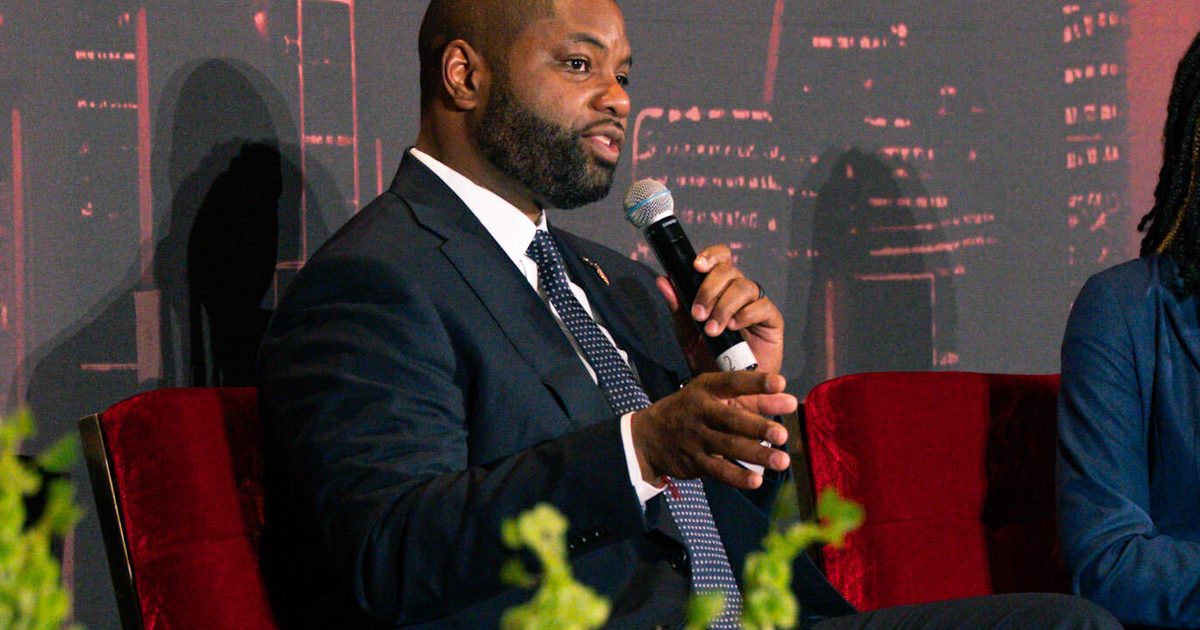
MIAMI — Rep. Byron Donalds, the Republican nominee for Florida governor, said he is targeting "north of 20%" of the Black vote in his bid for the governor's mansion, a share that would roughly double recent Republican performance with the state's Black electorate.
Donalds made the figure public in an interview with CBS News, marking a shift in a political career in which he rarely emphasized his race during nine years in Congress and the Florida House. Around 13% of Black voters backed Gov. Ron DeSantis in his 2022 reelection, according to CBS News exit polls. President Trump's 2024 share of the Black vote nationally was also well below the threshold Donalds is now claiming he can hit.
Donalds told CBS News he believes his candidacy is drawing Black voters who are reconsidering their party ties. "I think there's a lot of Black voters who are looking at my campaign because they're just trying to figure out who's going to fight for them," he said. He added: "I think the other thing with Black voters: they're starting to not be as monolithically tied to the Democrat Party."
Black voters have been one of the Democratic Party's most reliable constituencies for decades. Nationally, roughly 90% of Black voters backed Democratic presidential candidates in recent cycles, and the share has rarely dipped below 85% in the past four presidential elections. Florida's Black population is about 17% of the state, concentrated in Miami-Dade, Broward, Duval, and Orange counties — areas where even modest shifts can swing close statewide races.
Donalds built a national profile as one of Trump's most visible surrogates to Black voters in 2024, co-headlining a multi-city outreach tour with Rep. Wesley Hunt of Texas. The effort was part of a broader Republican push to peel away Black men in particular, a group Trump's campaign targeted with targeted advertising and appearances.
Donalds is also using smaller, less conventional events to reach Black voters. One recurring format he has attended is called "Congress, Cigars & Cognac," a gathering designed to bring political conversation into social settings rather than traditional campaign rallies. The approach mirrors a strategy Republicans have used in other states to reach voters who rarely attend party events.
Whether Donalds can translate the outreach into votes remains an open question in a state that has not elected a Black governor since Reconstruction. Florida's last Democratic governor, Lawton Chiles, left office in 1999, and Republicans have held the governor's mansion since 1999. Donalds would need to win over Black voters at a rate no Florida Republican has achieved in the modern era while also holding the GOP's rural and suburban base.