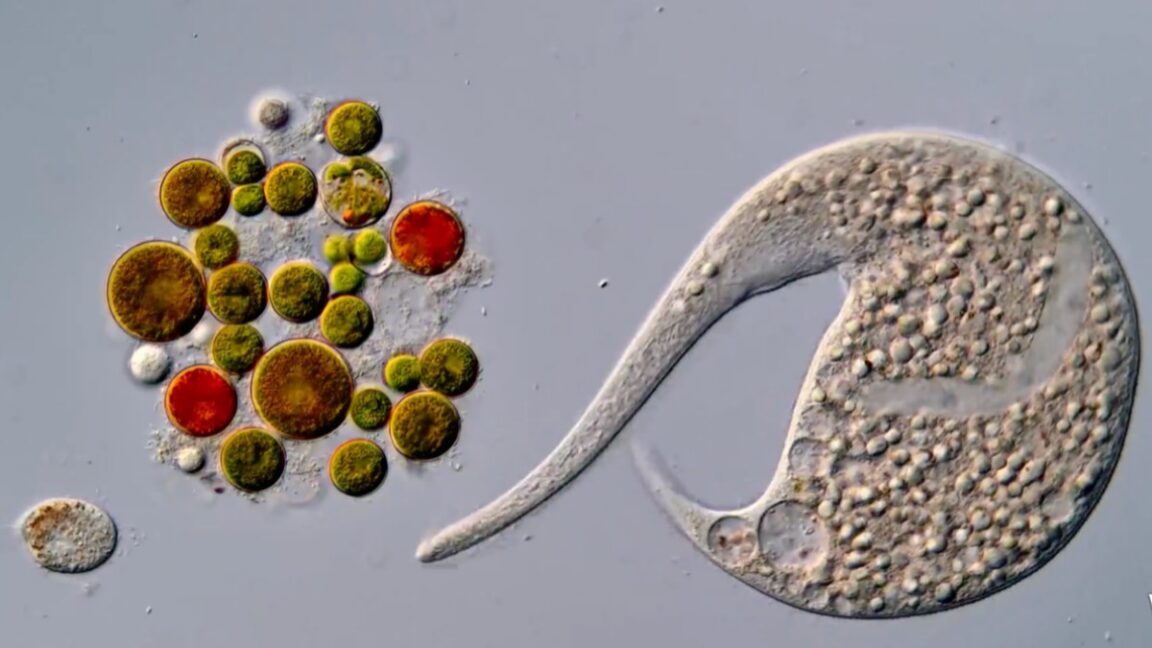
Nikon has disqualified the first-place entry in its 2025 Small World in Motion competition after the creator disclosed using a generative AI model to build the winning video, and awarded the top prize to a different researcher whose entry shows cilia beating on a cell surface.
The disqualification marks the first time the contest, which has run since 1975 and added a video category in 2011, has stripped a title over AI-generated imagery. The competition draws thousands of entries annually from microscopy labs, universities, and independent researchers in dozens of countries.
The original winner had used an AI model to reconstruct grayscale microscopy images into a moving sequence, according to a statement from the entrant. Judges said the technique was used "to distinguish and visualize features in the reconstructed grayscale images," which placed the submission outside the contest's requirement that footage depict actual observed specimens.
The new first-place entry comes from a researcher who filmed cilia — the hair-like structures that propel fluid across cell surfaces — using light microscopy. The video captures the cilia's coordinated beating in real time, a process that drives mucus clearance in airways and cerebrospinal fluid flow in the brain.
Nikon said the winning work was made "to generate the experimental movie, the cilia, or their motion," confirming the footage reflects genuine biological activity rather than a computational reconstruction. The competition's stated aim is "to showcase the beauty and complexity of things seen through the light microscope."
Generative AI tools have become common in scientific imaging, where models can fill in missing pixels, sharpen noisy frames, and upscale low-resolution captures. The technique is useful for analysis but creates a problem for competitions built on the premise that what viewers see is what the microscope recorded.
Small World in Motion entries are judged on both scientific merit and visual impact. Submissions must show living organisms or biological processes captured through a microscope, and rules prohibit digital manipulation that alters the underlying structure being observed.
Nikon did not say whether it would add explicit AI disclosure requirements to future competition rules. The company has not commented on whether other entries in the 2025 field were reviewed for similar issues.