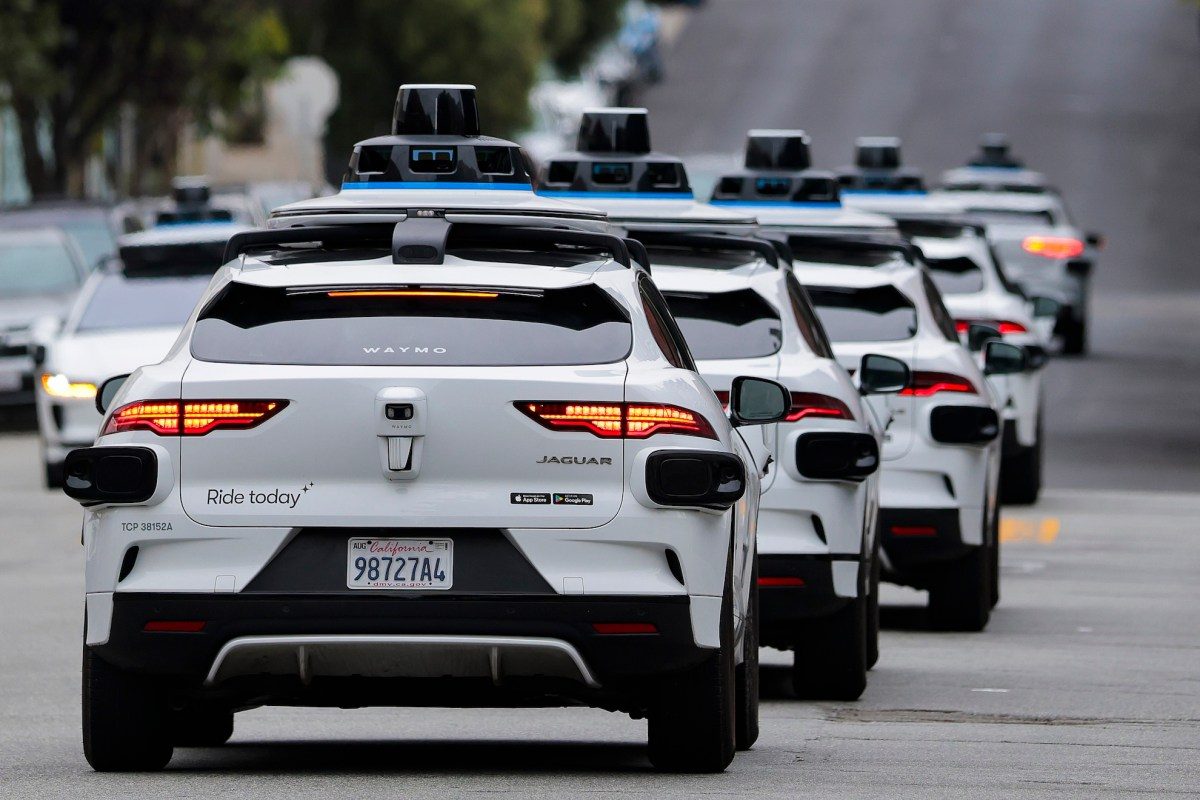
California regulators will fine robotaxi companies whose driverless cars block police, firefighters, and ambulances responding to emergencies, under new rules that take effect immediately. The penalties target a pattern of incidents in which stopped autonomous vehicles obstructed active scenes, and the bulk of those cases involved Waymo, the largest robotaxi operator in the United States.
Waymo runs roughly 4,000 autonomous vehicles in commercial service, the largest fleet of any U.S. operator, which puts it at the center of the enforcement push. The company has expanded across San Francisco, Los Angeles, Phoenix, and Austin, and its vehicles log millions of driverless miles annually.
The fines give state authorities a direct financial lever over companies that have until now faced mostly voluntary cooperation and public pressure after high-profile stalls. Blocking a fire truck or ambulance can delay response times by minutes, and minutes matter in cardiac arrest, fire, and crash calls.
The problem is not hypothetical. Driverless cars have repeatedly stopped in intersections, frozen mid-block, and refused to move when emergency crews needed a lane. In one widely reported San Francisco incident, a Waymo vehicle drove into an active fire scene and sat on the hose line while crews worked.
Robotaxi software is built to be cautious, and that caution can conflict with the improvisation emergency scenes require. A human driver who sees flashing lights and hears sirens pulls over or waves through; a machine may simply stop and wait for conditions its planners never anticipated.
Waymo has said it works closely with first responders and has built tools for crews to communicate with its fleet. The company has pointed to its safety record relative to human drivers, citing federal crash data showing its vehicles involved in fewer injury-causing incidents per mile than human-driven cars.
Those safety comparisons do not address the obstruction problem, which is about traffic flow and emergency access rather than crashes. Regulators in California have been weighing tougher oversight of autonomous vehicles for more than a year, following complaints from San Francisco police and fire officials.
The new fines apply to operators whose vehicles interfere with emergency response, not just those involved in collisions. That distinction matters because most robotaxi incidents never produce a crash report, leaving them largely invisible in the safety statistics companies cite.
California is the largest testing ground for driverless cars in the country, and its rules often become the template other states adopt. Texas, Arizona, and Nevada have all allowed commercial robotaxi service, and each now faces the same question of how to hold operators accountable when a machine blocks the road.
Waymo has not said how it will respond to the fines or whether it will contest any specific penalty.