SpaceX scrambled a drone delivery of a replacement spacecraft component to its Florida launch pad after a hardware failure threatened to delay Crew-13, the mission that carried Jessica Watkins to orbit as the first Black woman to command a spaceflight.
The part failed during final launch preparations, according to the company's account of the mission. With the launch window closing, SpaceX flew the spare component to the pad by drone rather than wait on a ground courier, swapped it in, and proceeded with liftoff.
Watkins led the crew as commander, a first in the history of human spaceflight. She had previously flown aboard NASA's Crew-4 rotation to the International Space Station in 2022, logging 170 days in orbit before returning for the commander's seat.
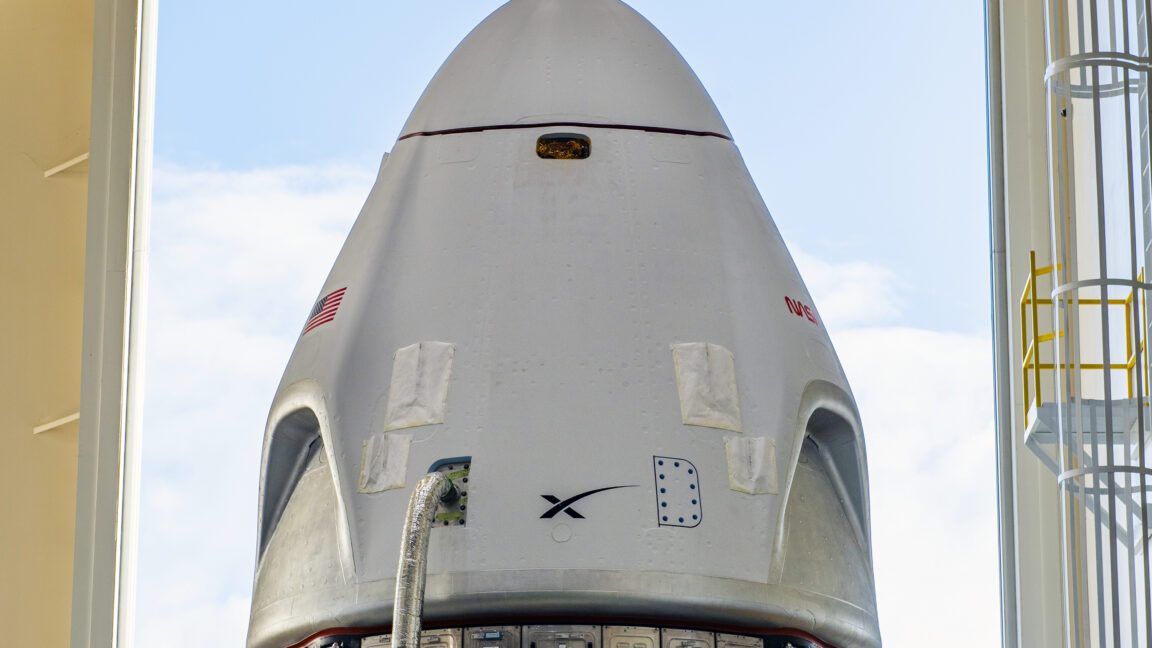
The spacecraft itself, a Crew Dragon capsule named "Grace," was photographed stacked atop its cylindrical trunk section during pad preparations at Kennedy Space Center. The trunk houses the capsule's solar arrays and unpressurized cargo and is jettisoned before reentry.
SpaceX has leaned on drone logistics before, but using one to move flight hardware to the pad hours before launch is unusual. The company builds and refurbishes Crew Dragons at its Hawthorne, California headquarters, roughly 2,500 miles from the Florida launch site, which leaves little margin when a part fails late in the flow.
NASA relies on SpaceX and Boeing to ferry astronauts to and from the station under its Commercial Crew Program. Boeing's Starliner has flown crewed only once, in 2024, and returned without its astronauts after thruster failures, leaving SpaceX as the agency's sole operational crew carrier.
That dependence raises the stakes on every late-stage hardware problem. A scrub of Crew-13 would have pushed the rotation schedule and left the station's Expedition crew short-handed until the next window opened.
Watkins' command adds a milestone to a program that has now flown more than a dozen crewed missions. She joins a short list of Black astronauts — including Victor Glover, who piloted Crew-1 and later flew around the Moon on Artemis II — but no Black woman had held a mission's top seat until Crew-13.
SpaceX has not disclosed which component failed or what caused the defect. The company has not said whether the same part is used across the Dragon fleet or whether other capsules will be inspected.