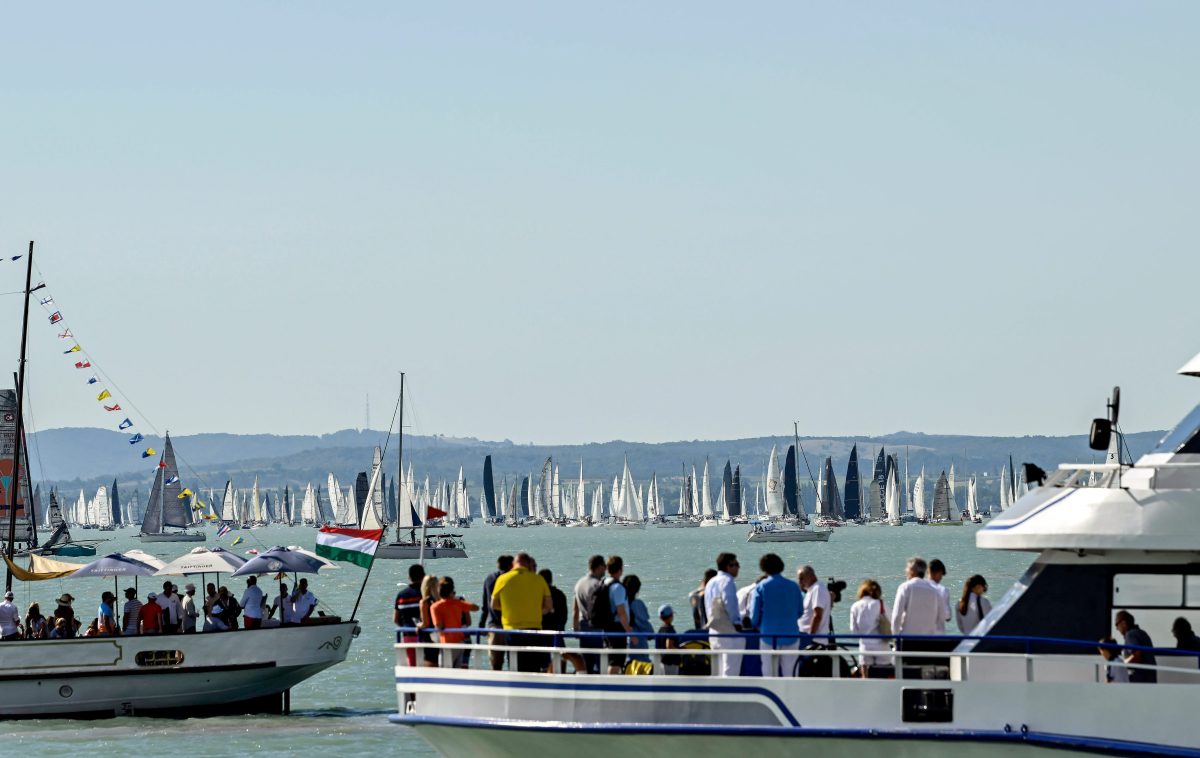
Luxury apartment prices on Hungary's Lake Balaton have climbed as high as 2.45 million euros — roughly $2.78 million — in the resort town of Tihany, even as several high-profile developments around the lake stall or sit unfinished. The figure, for a single apartment on the peninsula jutting into the lake's north shore, places parts of the so-called "Hamptons of Hungary" in the same price bracket as prime vacation property in Western Europe.
The average transaction value for a vacation home around Lake Balaton has reached 744,000 Hungarian forints per square meter, according to market data cited by CNBC, reflecting a decade-long run-up driven by Budapest buyers, Austrian and German investors, and a short supply of waterfront land. The lake, roughly 90 minutes by car from Budapest, has drawn luxury developers since the mid-2010s, when the Hungarian government began promoting the region as a tourism priority.
But the pipeline is thinning. Several announced projects — including marina-adjacent condominium complexes and boutique hotels — have been delayed or quietly shelved as construction costs in Hungary rose faster than developers' pricing assumptions. Hungarian construction material prices climbed sharply after 2021, and labor shortages in the Balaton region have pushed build times well past original schedules.
Tihany, a protected historical district on a peninsula that juts into the lake, carries some of the tightest building restrictions in the country. New construction there requires approvals from heritage authorities, and the usable land supply is effectively fixed. That scarcity explains why the top-end apartment price in Tihany sits well above the lake-wide average and why developers who do secure permits face years of regulatory review before breaking ground.
The broader Hungarian property market has cooled since 2022. The National Bank of Hungary raised its base rate to 13% by late 2022 to fight inflation, pushing mortgage costs up and slowing transaction volumes nationwide. Vacation-home buyers around Balaton, many of whom pay cash, have been less affected by credit conditions than Budapest apartment buyers, but developers relying on pre-sales have felt the slowdown directly.
Foreign buyers remain active in the upper tier. Austrian and German purchasers account for a significant share of transactions above 1 million euros around the lake, drawn by prices that remain below comparable Alpine or Adriatic resort markets. Hungarian law allows foreigners to buy apartments freely, though agricultural land and some protected properties carry restrictions.
Whether the stalled projects resume depends largely on construction costs and interest rates. Hungary's inflation rate fell back into single digits in 2024, and the central bank has cut rates, but developers say financing for new resort projects remains difficult to secure at the scale needed for the large marina and hotel schemes announced during the boom years.