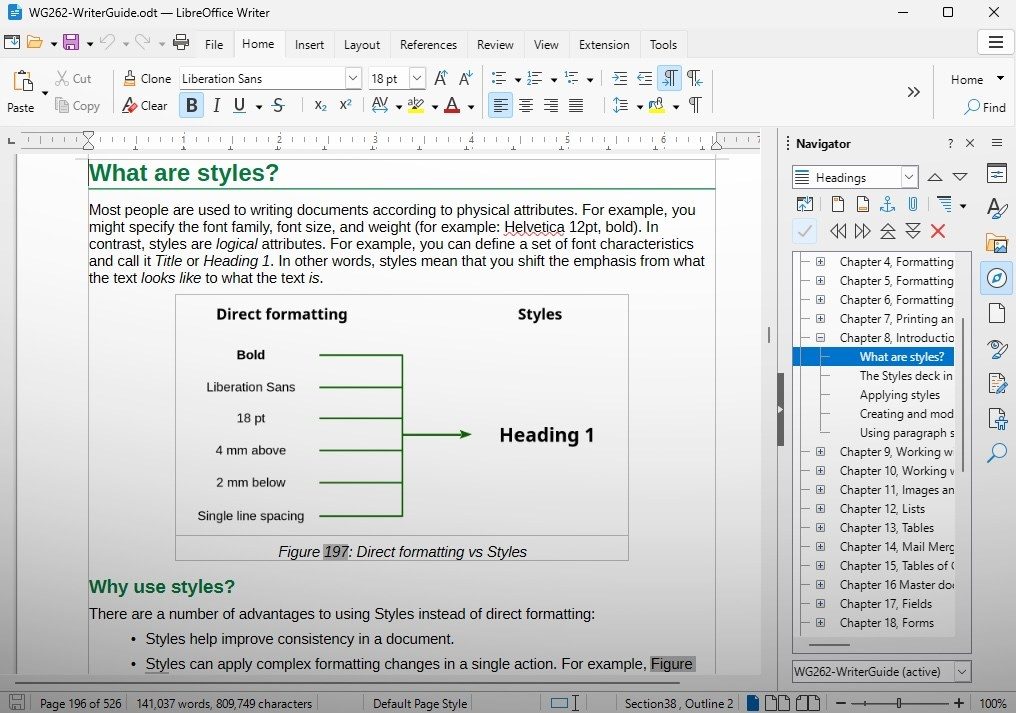
LibreOffice now ships with a setting that turns off artificial intelligence entirely, making the absence of AI an advertised feature of the free, open-source office suite rather than a gap in its capabilities.
The toggle, surfaced in the software's settings, disables any AI-driven functionality across the suite — the word processor, spreadsheet, and presentation programs used by millions of people as a no-cost alternative to Microsoft Office. The Document Foundation, which maintains LibreOffice, has positioned the option as a deliberate stance rather than a technical limitation.
The move lands as major software vendors race to embed generative AI into their products. Microsoft has pushed its Copilot assistant into Word, Excel, and Outlook, tying the feature to paid subscription tiers. Google has done the same across Google Workspace. LibreOffice, which does not charge for its software, is betting that a meaningful share of users want an office suite that does none of this.
That bet has a business logic behind it. LibreOffice is widely deployed by governments, schools, and public institutions in Europe, several of which have raised concerns about data being sent to third-party AI services. A setting that guarantees no document content leaves the machine for AI processing gives IT administrators a straightforward compliance answer.
The foundation has not disclosed how many users have enabled the setting, and the feature's practical scope depends on how much AI functionality the suite carries in the first place. LibreOffice's core tools have historically been built without cloud-dependent features, which means the setting may function more as a formal guarantee than a switch that disables a large existing feature set.
The timing puts LibreOffice in contrast with an industry consensus that treats AI integration as inevitable. Every major productivity competitor has moved in the opposite direction, spending heavily to add assistants that summarize documents, draft text, and generate formulas. LibreOffice's choice to market the opposite — a suite that explicitly does not do those things — gives it a distinct pitch to users who see those features as unwanted.
Whether that pitch converts into adoption is a separate question. LibreOffice's share of the desktop office market remains small compared with Microsoft's, and the users most likely to care about an AI kill switch are also the users most likely to already be running open-source software. The setting's real audience may be institutional buyers who need to certify that AI is switched off, not individual users who simply dislike it.