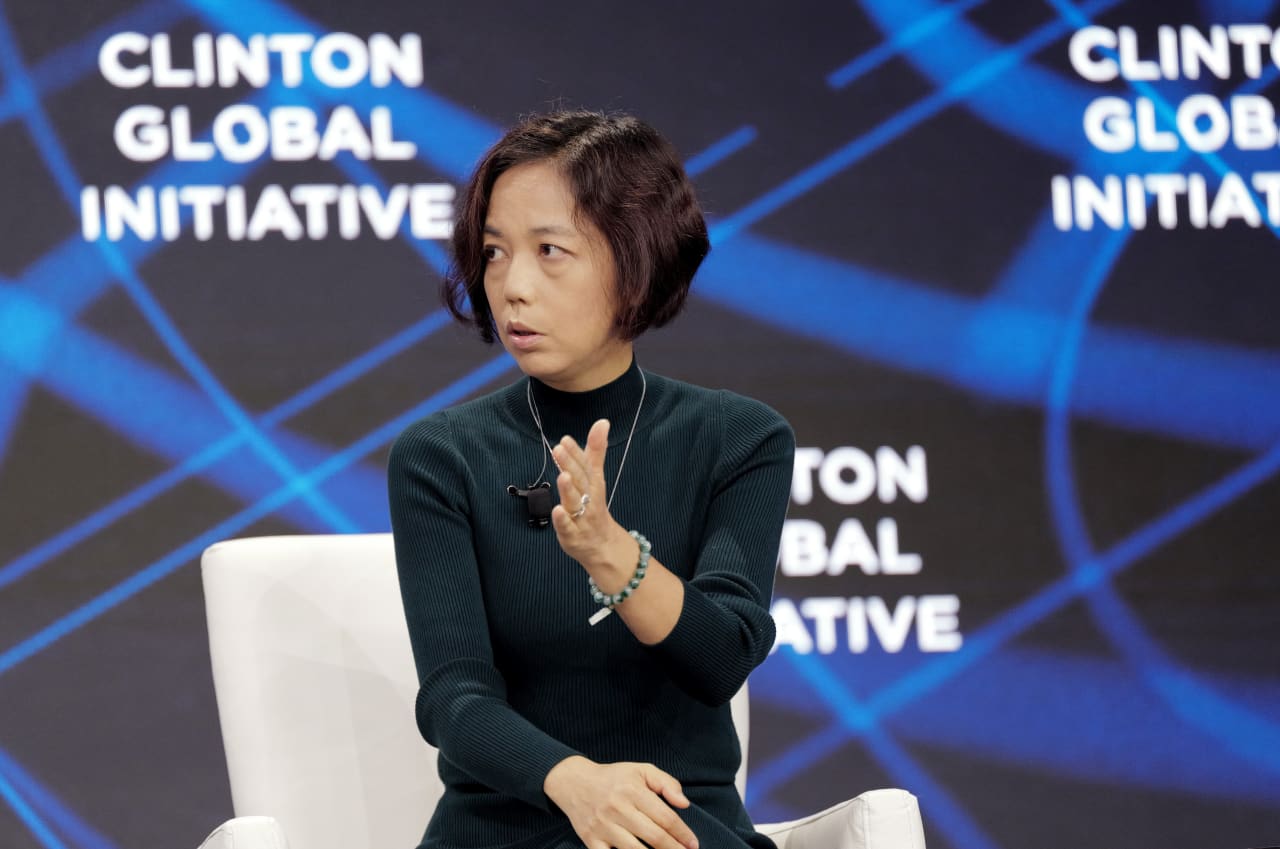
AMD agreed to acquire World Labs for $8 billion, a deal that hands the chipmaker spatial-intelligence technology and, perhaps more valuable, founder Fei-Fei Li.
The companies announced the acquisition this week. World Labs builds AI models that let machines understand and reason about three-dimensional space. AMD makes the processors that power AI data centers.
Li, a Stanford professor, is one of the most recognized names in artificial intelligence. She led the development of ImageNet, the dataset that helped spark the deep-learning boom in the early 2010s.
Her reputation could matter more to AMD than any code or model the deal delivers. Recruiting elite AI researchers has become a defining competition among chipmakers, and a marquee name helps open doors.
"The real prize is the talent," said one analyst familiar with the deal, who spoke on condition of anonymity. "You can buy models. You cannot easily buy the person everyone wants to work for."
AMD has spent years trying to close the gap with Nvidia in AI chips. Nvidia's market value has soared past $3 trillion on demand for its processors, which dominate AI training and inference.
AMD's answer has been hardware of its own, plus software and models that make that hardware useful. Buying World Labs pushes AMD deeper into spatial intelligence, a field with obvious applications in robotics, autonomous vehicles and digital twins.
That is where the strategic logic sharpens. Spatial models could give AMD a foothold in physical-world AI, where machines must perceive and act in real environments rather than just generate text.
World Labs had raised significant venture funding and was valued well below the $8 billion price. The premium reflects both the technology and the scarcity of proven leaders in the field.
AMD did not disclose terms of Li's role or retention packages. The company also did not say how many World Labs employees would join.
The deal still needs regulatory approval. AMD expects it to close later this year, subject to those reviews.
For AMD, the bet is straightforward: chips are commodities without ecosystems, and ecosystems start with people. If Li can attract researchers and customers, the $8 billion looks less like an acquisition and more like a recruiting budget.