A fifth unvaccinated person has died from measles in the United States, marking the deadliest measles outbreak since the disease was declared eliminated from the country in 2000. The Centers for Disease Control and Prevention is not counting all confirmed measles deaths, according to reporting by Ars Technica, leaving the official toll lower than the actual number of fatalities.
State health officials are racing to contain the spread, administering more than 8,500 vaccine doses to residents in affected areas. The vaccination push represents one of the largest emergency immunization efforts in recent years as public health departments attempt to build herd immunity before the virus reaches more communities.
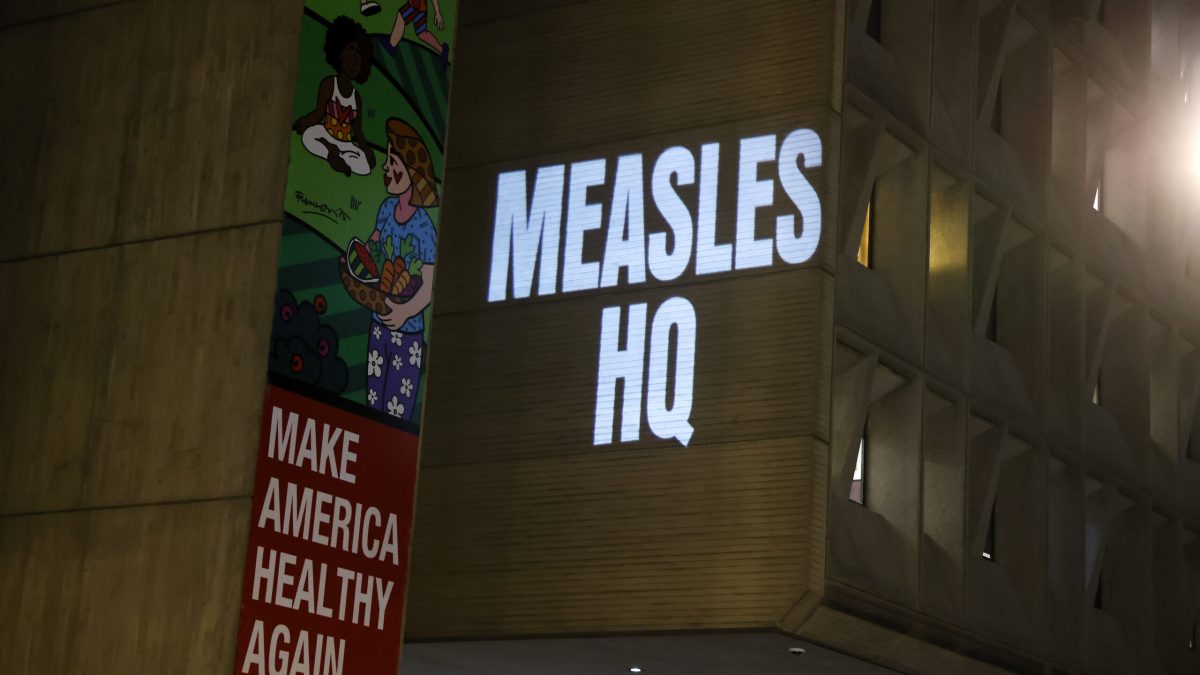
The outbreak has grown under Health and Human Services Secretary Robert F. Kennedy, Jr., who has a long record of questioning vaccine safety. The advocacy group Protect Our Care projected a message onto the U.S. Department of Health and Human Services headquarters in Washington, D.C., calling attention to the escalating crisis and Kennedy's response to it.
Measles was declared eliminated from the U.S. in 2000 after decades of high vaccination rates driven by the two-dose MMR vaccine, which is roughly 97 percent effective at preventing infection. That elimination status has been threatened by falling immunization coverage, fueled in part by misinformation from anti-vaccine activists. Kennedy, before taking his current post, repeatedly linked vaccines to autism, a claim debunked by extensive research.
Measles is among the most contagious viruses known to science. Each infected person can spread it to as many as 18 unvaccinated people, and the virus can linger in the air of a room for up to two hours after the infected person has left. Complications include pneumonia, brain swelling, and death. Children under 5 and immunocompromised people face the highest risk.
The CDC's decision not to count every death complicates the public picture of the outbreak's severity. Epidemiologists rely on accurate mortality data to model transmission and allocate resources, and undercounting can delay the kind of aggressive response that stops outbreaks. The gap between reported and actual deaths also makes it harder for the public to assess the risk in their own communities.
The five deaths have occurred in a single outbreak that has spread across multiple states. Health departments in affected jurisdictions have set up mobile vaccination clinics and are contacting people who may have been exposed. The MMR vaccine can prevent infection if given within 72 hours of exposure, and can reduce severity if given within six days.