Every spring, the National Oceanic and Atmospheric Administration releases its hurricane season outlook. Every summer, coastal residents either shrug or scramble. The difference between those two reactions often comes down to one thing: whether they understand what the forecast actually says and what it does not.
Hurricane season runs June 1 through November 30, with the statistical peak landing around September 10. But storms have formed in May and as late as December. The Atlantic basin has produced at least one named storm before June 1 in several recent years, which is why forecasters now routinely warn that the "season" is a guideline, not a fence.
Here is what the science says about how many storms to expect, why the numbers keep climbing, and what you can do right now to protect your home.
What the Hurricane Season Forecast Actually Tells You
NOAA's outlook gives ranges, not certainties. A typical forecast might call for 17 to 25 named storms, 8 to 13 hurricanes, and 4 to 7 major hurricanes (Category 3 or higher). Those ranges come from climate models that weigh sea surface temperatures, wind shear, the El Niño-Southern Oscillation, and the West African monsoon.
The single biggest driver in recent years has been record-warm Atlantic Ocean water. In 2023, sea surface temperatures in the tropical Atlantic hit their highest levels on record, and the season produced 20 named storms. The 2024 season generated 18 named storms, including Hurricane Helene and Hurricane Milton, which together caused more than $100 billion in damage.
Warm water matters because hurricanes feed on it. A storm needs ocean temperatures of at least 80 degrees Fahrenheit down to a depth of about 150 feet to intensify. When that warm layer runs deeper, storms can strengthen faster and resist the cooling effect of their own churning.
Forecasters also watch wind shear, the change in wind speed and direction at different altitudes. High shear tears storms apart. Low shear lets them grow. During La Niña years, shear over the Atlantic drops, and activity typically rises.
Forecast numbers describe the ocean and atmosphere. They do not predict whether a storm hits your ZIP code. A quiet season can still deliver one catastrophic landfall.
That last point is the one forecasters repeat most. Hurricane Andrew formed in a below-average 1992 season and became the costliest storm in US history at the time. Hurricane Michael in 2018 made landfall in Florida as a Category 5 during a season that started slow. The number of storms matters far less than whether one comes to you.
Why Hurricane Risk Is Growing Along the US Coast
Three forces are stacking up to make hurricane damage worse, and only one of them is about storm frequency.
The first is coastal development. Roughly 40 percent of the US population lives in coastal counties, according to NOAA, and that share keeps rising. More homes, roads, and businesses sit in the path of landfalling storms than at any point in history. Every new subdivision on a barrier island adds to the potential loss.
The second is sea level rise. Global sea levels have risen about 8 to 9 inches since 1880, and the rate has accelerated. Higher baseline water means storm surge pushes farther inland. A Category 2 storm today can flood areas that a Category 3 would have reached decades ago.
The third is rapid intensification. Storms that jump from Category 1 to Category 4 in under 24 hours have become more common in the Atlantic. Hurricane Ian in 2022 and Hurricane Idalia in 2023 both intensified quickly before landfall. Rapid intensification compresses the time families have to evacuate and prepare.
What Storm Surge Really Does
Storm surge, not wind, causes most hurricane deaths in the United States. The National Hurricane Center attributes roughly half of all US hurricane fatalities to drowning from surge and inland flooding. Surge is a dome of ocean water pushed ashore by a storm's winds. It can raise water levels 20 feet or more above normal in the worst cases.
The geography of your coastline determines your risk. The Gulf Coast, with its shallow continental shelf, is especially vulnerable. The shape of the coastline around Louisiana, Mississippi, and the Florida Panhandle can funnel surge into bays and rivers, pushing water far upstream.
How to Prepare Your Home Before a Storm Forms
The best time to prepare is when no storm is on the radar. Stores sell out of plywood, generators, and water within hours of a hurricane watch. Contractors book up weeks in advance. Preparation done in calm weather costs less and works better.
Start With a Home Inspection and a Plan
- Identify your home's weak points: garage doors, windows, sliding doors, roof edges, and gable ends.
- Know your evacuation zone. Most coastal counties publish zone maps online, and emergency managers use them to order evacuations.
- Check your insurance. Standard homeowners policies do not cover flood damage. Flood insurance through FEMA's National Flood Insurance Program or a private insurer usually has a 30-day waiting period, so buying it the week before a storm does nothing.
- Document your home's contents with photos or video. Store the file in the cloud, not just on your phone.
Reinforce the Structure
Roof damage is the most common and most expensive hurricane repair. The Insurance Institute for Business & Home Safety has found that a properly installed secondary water barrier under roof shingles can cut water intrusion significantly. Ring-shank nails and hurricane straps that tie the roof to the walls make a measurable difference in wind tests.
Garage doors fail more often than people expect. A standard unbraced door can buckle under wind pressure around 70 mph, and once the garage opens, wind pressure can lift the roof off the house. A bracing kit costs a few hundred dollars and takes an afternoon to install.
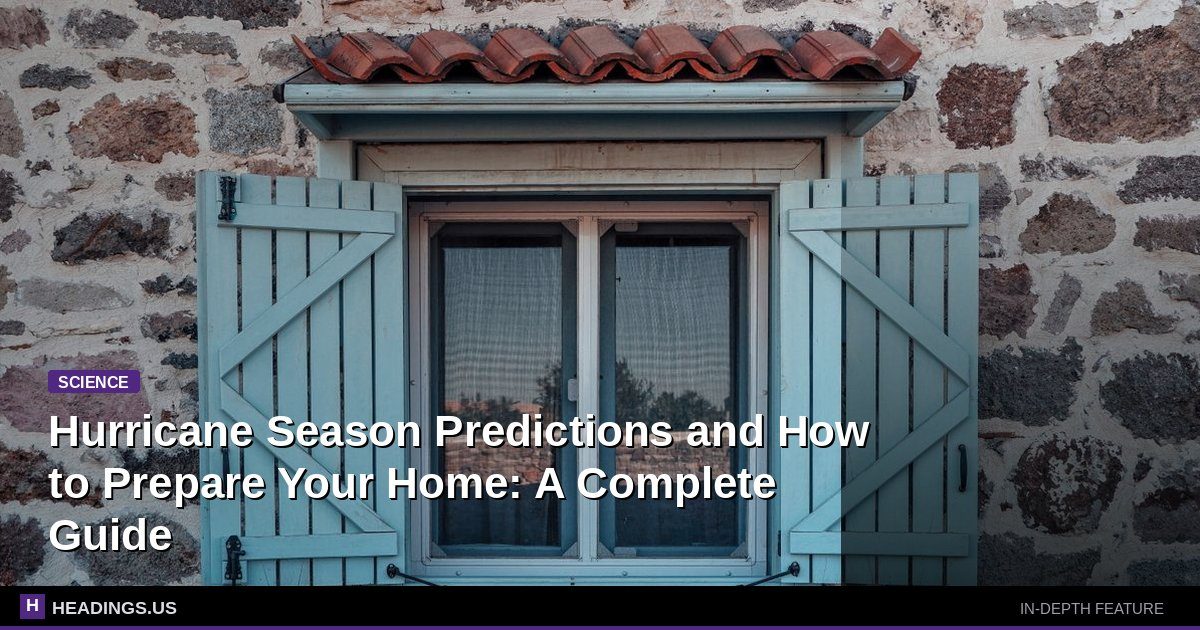
Windows and sliding glass doors should be protected with impact-rated glass, permanent storm shutters, or 5/8-inch plywood cut to fit. Tape does nothing. The American Red Cross and FEMA both say taping windows is a myth that wastes time.
Clear the Yard and Secure Loose Items
Anything that can fly becomes a projectile. Patio furniture, grills, trash cans, garden tools, kids' toys, and potted plants should move inside or into a garage. Trim trees and remove dead limbs well before storm season. A palm frond or a loose shingle at 100 mph can punch through a window.
Build a Supply Kit That Lasts
FEMA recommends at least one gallon of water per person per day for at least three days, plus a three-day supply of nonperishable food. In practice, coastal residents should plan for seven days. Power outages after major storms routinely last a week or longer. After Hurricane Maria hit Puerto Rico in 2017, some areas went months without electricity.
- Battery-powered or hand-crank radio and a NOAA weather radio
- Flashlights and extra batteries for each
- First aid kit and a seven-day supply of prescription medications
- Cash, because card readers and ATMs fail without power
- Important documents in a waterproof container or scanned to the cloud
- Pet food, leashes, and vaccination records if you have animals
- Charged power banks for phones
What to Do When a Storm Is Named and Heading Your Way
Once a storm enters the cone of uncertainty, the clock starts. The National Hurricane Center issues watches 48 hours before tropical-storm-force winds arrive and warnings 36 hours out. Those windows are shorter than most people assume.
Fill bathtubs and large containers with water for flushing and washing if the power goes out. Set your refrigerator and freezer to their coldest settings and freeze water bottles to keep food cold longer. Move valuables to the highest floor. Unplug electronics to protect against surges when power returns.
If you are in an evacuation zone and officials call for evacuation, leave. Sheltering in place during a mandatory evacuation order endangers you and the first responders who may later try to reach you. Traffic is worst in the final hours, so leaving early is both safer and faster.
After the Storm Passes
Do not return until officials say it is safe. Downed power lines, contaminated water, and structural damage make reentry dangerous. When you do return, photograph everything before you clean up. Insurers need documentation, and so does FEMA if you apply for assistance.
Beware of post-storm scams. Unlicensed contractors often flood into damaged neighborhoods offering quick roof repairs and demanding large deposits up front. Verify licenses through your state's contractor board and never pay in full before work is done.