The map most Americans grew up with is wrong.
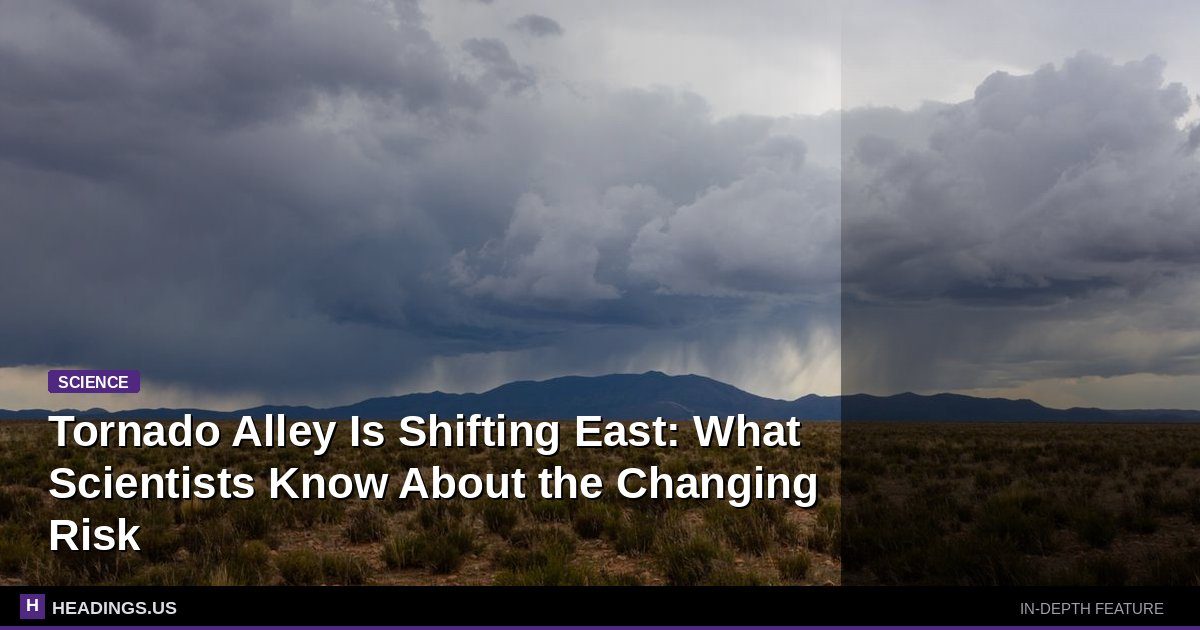
For decades, schoolchildren learned that Tornado Alley ran north from Texas through Oklahoma, Kansas, and Nebraska — a wide corridor of flat plains where twisters touched down with grim regularity. That mental map shaped where people built homes, where cities invested in sirens, and where insurance companies priced risk.
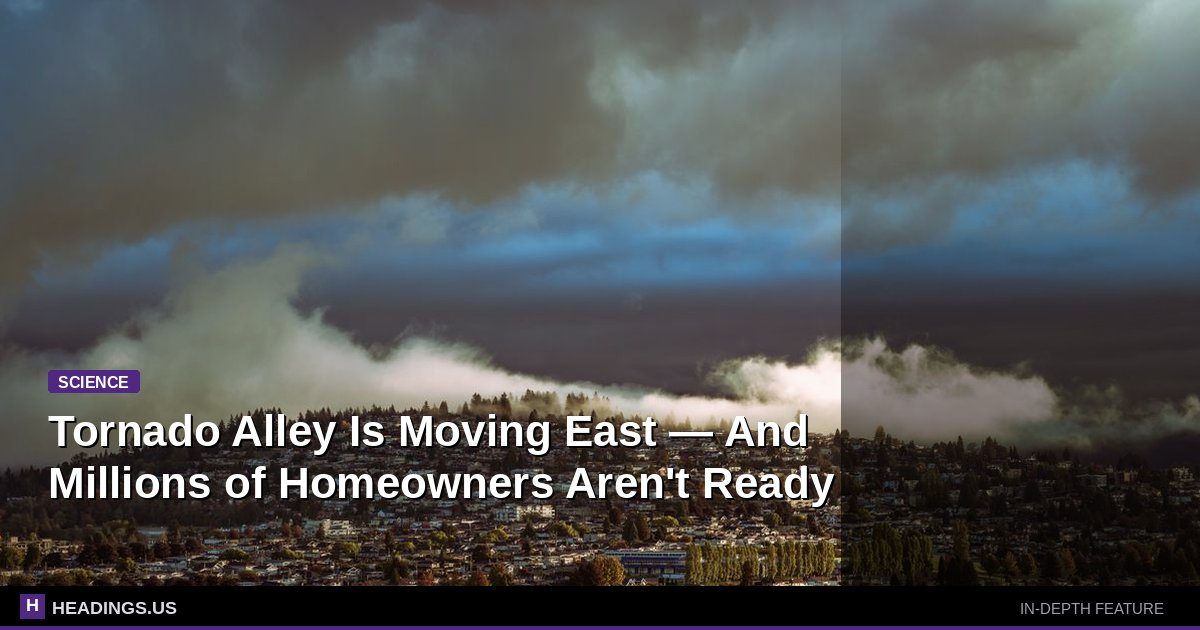
But the data tells a different story now. Over the past 40 years, the center of tornado activity in the United States has shifted measurably to the east and south. The new hot zone stretches across Louisiana, Mississippi, Alabama, Tennessee, Arkansas, and into parts of Kentucky and Missouri. Scientists call it "Dixie Alley," and it is, by several measures, more dangerous than the Plains it is replacing.
What the Numbers Actually Show
The shift is not a matter of opinion. A 2018 study published in the journal npj Climate and Atmospheric Science found that tornado frequency had increased significantly in the Southeast while decreasing in parts of the traditional Alley. Research led by Northern Illinois University meteorologist Victor Gensini documented a roughly 10 to 15 percent increase in tornado days across the lower Mississippi Valley, paired with a decline of similar size across the central and southern Plains.
The trend has continued. In 2023, the United States recorded 1,197 tornadoes, according to the National Oceanic and Atmospheric Administration — and the bulk of the most destructive ones hit Southern states. Alabama, Mississippi, and Tennessee consistently rank among the top states for tornado fatalities. In 2011, the Super Outbreak killed more than 300 people across the South in a single four-day span, the deadliest tornado event in modern U.S. history.
Here is the part that surprises people: the Plains still get more tornadoes overall. Texas, Kansas, and Oklahoma remain tornado-rich. What has changed is where the deadly ones happen. Southern tornadoes kill more people per storm, and the gap is widening.
Why the South Is More Dangerous
Several factors stack on top of each other, and none of them are easy to fix.
Timing. Southern tornadoes often strike at night or in the early morning, when people are asleep and less likely to hear warnings. A 2022 study in Weather, Climate, and Society found that nighttime tornadoes are roughly 2.5 times more likely to be fatal than daytime ones. In the Plains, storms tend to fire in the late afternoon. In the South, they frequently arrive after dark.
Terrain and trees. The Southeast is heavily forested and hilly. That means fewer people can see a tornado coming, and radar coverage is less complete at low altitudes. A tornado can be on top of a neighborhood before anyone sees it.
Housing. This may be the biggest factor of all. The South has a far higher concentration of mobile and manufactured homes than the rest of the country. According to the National Weather Service, more than half of all tornado deaths in the United States occur in manufactured housing, even though those homes make up only about 6 percent of the housing stock. In Mississippi and Alabama, that percentage is much higher.
Population density. More people live in the path. The South has grown rapidly over the past three decades, and new development has pushed into areas that were once open land.
"We've moved more people into harm's way in a region where the storms are harder to see, harder to hear, and more likely to kill," Gensini told reporters in a 2023 interview. "That combination is the story."
What's Driving the Shift
Scientists are still working out the exact causes, but a few mechanisms have strong support.
Warmer Gulf of Mexico waters are pumping more moisture into the atmosphere, feeding storms that form further east. At the same time, the jet stream — the river of air that steers weather systems across the country — has shown signs of shifting its typical springtime position. That shift changes where the ingredients for tornadoes come together: warm, moist air from the Gulf meeting cool, dry air from the north, with wind shear to spin the whole thing up.
Climate change is almost certainly part of the picture, but researchers are careful not to overstate the link. Tornadoes are small, short-lived, and hard to model. What scientists can say with confidence is that the geographic distribution has changed, and that the change is consistent with a warming atmosphere that holds more water vapor.
What Homeowners Should Actually Do
If you live anywhere from Texas to Kentucky to Georgia, the practical advice has changed. Here is what emergency managers and meteorologists say matters most.
1. Know your real risk level
Do not assume you are safe because you live outside the old Tornado Alley. Check the tornado risk maps published by NOAA and your state emergency management agency. If you are in the Southeast, assume you are in a tornado zone.
2. Have a shelter plan — and practice it
The safest place is a basement or a purpose-built storm shelter. If you do not have one, identify the most interior room on the lowest floor of your home, away from windows. For manufactured homes, this is not enough. FEMA and the National Weather Service both say the only safe option during a tornado in a mobile home is to leave it. Identify a nearby sturdy building — a church, a school, a community center — before you need it.
3. Get a NOAA weather radio
Outdoor sirens are designed for people who are outside. They are not meant to wake you up. A battery-powered NOAA weather radio with an alert function is one of the cheapest life-saving devices you can own, usually under $40.
4. Turn on wireless emergency alerts
Most smartphones now receive automatic tornado warnings through the Wireless Emergency Alert system. Check your phone settings to make sure alerts are not disabled. They are on by default, but people turn them off.
5. Review your insurance now
Standard homeowners policies cover wind damage from tornadoes, but there are limits and deductibles. In many Southern states, insurers have raised wind deductibles to 1 or 2 percent of the home's value. That means a $300,000 home could carry a $6,000 deductible. Read your policy before storm season, not after. If you rent, get renters insurance — it covers your belongings and temporary housing.
6. Document your property
Walk through your home with your phone and record everything. Open closets, film electronics, capture serial numbers. Store the video in the cloud. After a storm, this footage is often the difference between a full claim and a fight.
7. Build or buy a shelter if you can
Above-ground safe rooms and underground shelters typically cost between $3,000 and $8,000 installed. Some states, including Alabama and Oklahoma, offer rebates or tax incentives. FEMA publishes a list of approved shelter designs and manufacturers.
The Bigger Picture
The shift eastward is not a temporary blip. Researchers expect the trend to continue, which means millions of Americans who never thought of themselves as living in tornado country now do. The infrastructure — sirens, shelters, building codes, public awareness — has not caught up.
That gap is the real story. Tornadoes will always be unpredictable. But the number of people killed by them is not an act of God. It is a function of where we build, how we build, and whether we are ready. In the South, right now, too many communities are not.
The Plains will always have their storms. But the future of American tornado risk is being written in Mississippi, Alabama, and Tennessee — and the people living there deserve to know it.